


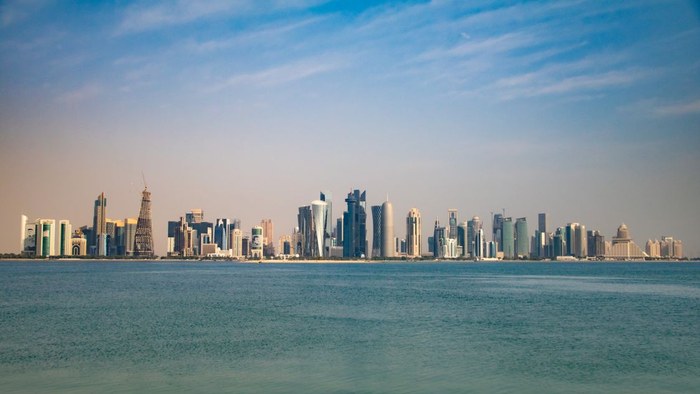
Qatar has launched Doha Investment, a dedicated platform to manage and develop the domestic portfolio previously held within the Qatar Investment Authority, in a restructuring announced on 20 September 2026.
The portfolio comprises more than 40 companies operating in over 80 markets. Named holdings include Qatar Airways Group, QNB Group, Ooredoo Group, Qatari Diar, Katara Hospitality and Hassad Food. More than 20 of the companies reported revenues above 1 billion Qatari riyals in 2025.
Prime Minister and Minister of Foreign Affairs Sheikh Mohammed bin Abdulrahman bin Jassim Al Thani chairs the platform. Minister of Commerce and Industry Sheikh Faisal bin Thani Al Thani serves as Managing Director and Vice Chairman.
Target sectors named in the announcement run across financial services, transport and logistics, telecommunications and technology, real estate, hospitality, food and agriculture, advanced technologies, manufacturing, supply chain and healthcare. The mandate is tied to Qatar's Third National Development Strategy and to the twin objectives of deepening local capital markets and increasing private sector participation.
The Prime Minister said the aim was to expand the role of the private sector in driving Qatar's economic growth. Sheikh Faisal said strong economies are built company by company.
Separating the domestic book from the global one is a structural change rather than a rebranding. A sovereign wealth fund holds national champions as investments and measures them on returns. An operating holding company with ministerial leadership holds them as businesses and can push on strategy, capital structure, governance and management in a way a passive shareholder generally does not. Abu Dhabi made the same move when it built ADQ, and Saudi Arabia has run its domestic portfolio through the Public Investment Fund on a similar operating basis.
The stated aims point to where this leads. Raising private sector participation and deepening local capital markets, in a portfolio of 40-plus companies of which more than 20 generate over a billion riyals of revenue, is most straightforwardly achieved through partial listings and stake sales. Qatar's domestic equity market is small relative to the size of its state-owned corporate sector, and the obvious way to close that gap is to float parts of it.
Boards with Qatari counterparties, whether as joint venture partners, customers or suppliers, should expect a more commercially demanding shareholder on the other side of the table, and a clearer route to monetisation events over the coming years.
One caution on figures. The launch announcement gives no capital, assets under management or portfolio valuation figure for Doha Investment. Estimates of the parent fund's assets that have circulated alongside the story are not a measure of this platform's size.