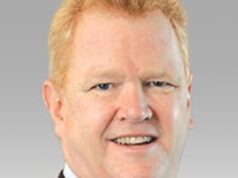


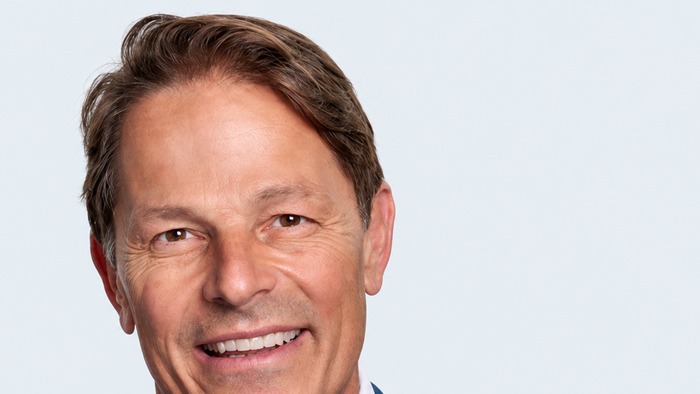
AngioDynamics has appointed Eric Honroth president and chief executive officer and elected him to its board, recruiting a senior Getinge executive to lead the New York medical device maker. He takes up the role at the start of November.
Honroth succeeds Jim Clemmer, who retires after a decade in the job. The handover is a planned one, and Honroth leaves Getinge at the end of October, giving a clean break between the two roles rather than an overlap.
He has been global president of Getinge's life science business, the division that supplies sterilisation and bioprocessing equipment to pharmaceutical manufacturers, and before that he ran Getinge's North America region. He joined the Swedish group in twenty eighteen. Earlier in his career he held senior commercial roles at Abbott Vascular, Becton Dickinson, CareFusion and Boston Scientific, which places most of his working life inside the vascular and interventional device markets that AngioDynamics competes in.
That history is the logic of the appointment. AngioDynamics has spent several years narrowing itself, divesting lower growth product lines and concentrating capital on its medical technology segment, where its thrombectomy and vascular access platforms compete directly against much larger companies. Executing that strategy depends less on inventing new categories than on winning hospital accounts against Boston Scientific, Becton Dickinson and their peers, and Honroth has sold into those accounts from the other side.
The company also has a scale problem that a new chief executive inherits rather than solves. It is a small capitalisation device maker in markets where the incumbents can outspend it on clinical evidence and on sales coverage. Honroth's Getinge experience of running a global division inside a larger group is directly relevant to the question of whether AngioDynamics remains independent or eventually finds a home inside one.
Clemmer's decade covered the strip-down of the portfolio and the repositioning toward medical technology, so his successor takes a narrower and more focused company than the one his predecessor inherited, with the harder commercial task still ahead of it.
AngioDynamics is listed on the Nasdaq and is headquartered in Latham, New York. It designs and manufactures medical devices used in oncology, vascular access and peripheral vascular disease, and sells into hospitals and interventional suites across North America, Europe and Asia.
The board seat that accompanies the chief executive title matters at a company of this size. AngioDynamics has a compact board and a single operating segment of real scale, so a chief executive who is also a director has direct access to the capital allocation conversation rather than presenting into it. For a company whose strategy turns on where it concentrates a limited research and commercial budget, that is a material difference.
Honroth also inherits a shareholder base that has watched a long portfolio simplification without yet seeing the growth it was meant to unlock. The divestments are done and the balance sheet is cleaner, which removes the excuses as much as the obstacles. His first reporting periods will be read as a test of whether the narrowed company can take share rather than merely cost less to run.