


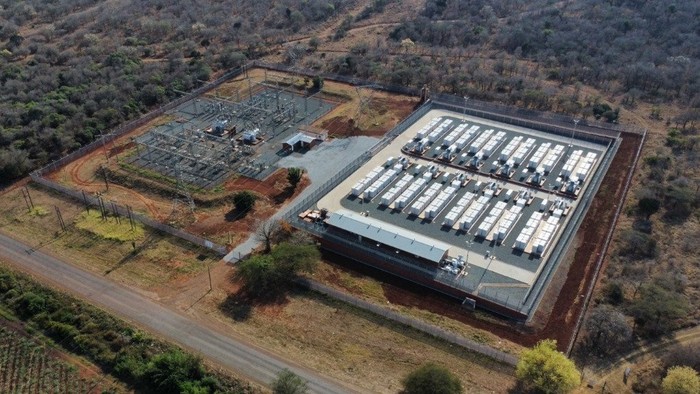
South Africa has set aside 4,600 MW of battery energy storage for public procurement under the first determination issued against the Integrated Resource Plan 2025, and the industry body representing storage developers has welcomed the allocation while pressing the government to treat storage as system infrastructure rather than as a bolt-on to generation.
The determination, issued by the Minister of Electricity and Energy, Kgosientsho Ramokgopa, under section 34 of the Electricity Regulation Act, opens the way for procurement of large-scale battery storage alongside a parallel allocation for gas to power. Taken together the two tranches account for roughly 9,600 MW of new capacity, the largest single commitment to flexible capacity South Africa has made.
The South African Energy Storage Association said the prioritisation reflects a shift in how the country's planners now understand the grid. Battery systems, it argued, have moved from a marginal technology to critical system infrastructure: they absorb energy that would otherwise be curtailed when wind and solar output exceeds demand, shift it into the evening peak, and provide the fast frequency response that a grid losing synchronous coal capacity increasingly needs.
That framing matters more than the headline number. South Africa's constraint has not been megawatts of generation for some time; it has been the ability to move energy across hours and across a transmission network that cannot always evacuate what is produced. Curtailment of renewable output in the Northern Cape has become a routine cost, and every unit curtailed is a unit the country paid to build and then declined to use. Storage attacks that problem directly, which is why the association is arguing for storage to be planned alongside transmission rather than procured as a separate round.
The second point the association raised is about sequencing. A determination is an authorisation to procure, not a contract, and South Africa's record of converting determinations into operating assets is uneven. The renewable programme moved quickly in its early bid windows and then stalled for years on grid capacity and offtaker credit questions. Storage procurement will meet the same two constraints, and the association's call for integrated energy planning is in substance a request that the grid connection queue and the procurement timetable be designed together rather than in sequence.
For Eskom, which has already built and energised battery projects at distribution substations, the determination creates a larger market than the utility can serve alone and brings independent developers into a segment it has so far largely occupied. For developers, the question is whether the bid windows arrive on a timetable that justifies holding equipment orders and balance sheet capacity open. The determination answers the first question. It does not yet answer the second.