


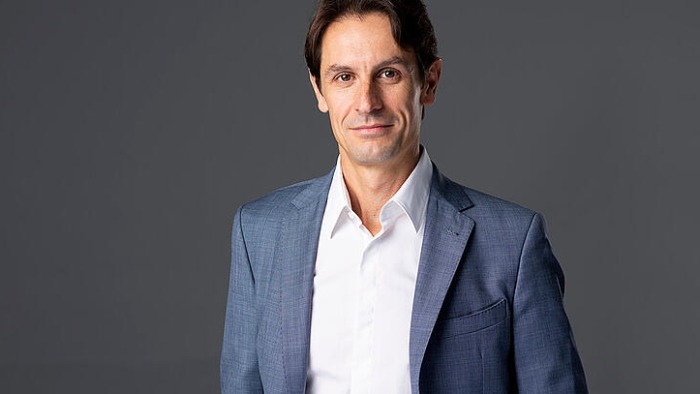
RHI Magnesita has named Gustavo Franco as Chief Executive Officer, promoting its Chief Customer Officer to the top job and ending a ten year tenure by Stefan Borgas.
The London listed refractories group said the change takes effect on 1 November 2026. Franco moves up from a commercial leadership role, which makes this an internal succession rather than an outside reset, and the company set the effective date more than two months after the announcement to allow a structured handover.
A quiet industry that matters
Refractories are the heat resistant materials that line the furnaces and vessels used to make steel, cement, glass and non ferrous metals. The products are unglamorous and the industry is little known outside the sectors it serves, but nothing in heavy industry gets made without them. That gives RHI Magnesita a position tied closely to global industrial production, and to the pace at which its customers decarbonise.
That last point is the strategic question the new chief executive inherits. Steelmaking is in the early stages of a shift from blast furnace routes toward electric arc and hydrogen based production. Each route has different thermal profiles and therefore different refractory requirements, so the transition is simultaneously a risk to established product lines and an opening for suppliers who position early.
Why a commercial appointment reads as deliberate
Promoting the Chief Customer Officer rather than an operations or finance executive is a signal about where the board sees the next phase of value. In a business selling technical products into long standing industrial relationships, the commercial function carries the customer intimacy that determines whether a supplier is treated as a component vendor or as a partner in process redesign. Companies that expect the second kind of relationship to matter tend to promote the people who own it.
Borgas leaves after a decade that included the combination which created the current group, bringing together the Austrian and Brazilian sides of the business into a single listed entity, and the subsequent work of integrating two industrial footprints. A ten year tenure is long by the standards of listed industrial chief executives, and successions at that point usually reflect a board judgement that a cycle has completed rather than a reaction to performance.
The inheritance
Franco takes over a group exposed to industrial demand in Europe and Asia, to energy costs that feed directly into the economics of high temperature manufacturing, and to raw material supply for magnesia, where the geography of production is concentrated. Those are structural features of the industry rather than company specific problems, but they shape the room a chief executive has to manoeuvre.
For the London market, the appointment keeps a global industrial leader in place with continuity of strategy. Investors reading the change will note that the board chose someone already inside the commercial engine of the business, at a moment when the customer conversation is becoming more technical rather than less.