NCC AB has been awarded a contract to build two further stages of the flood defences protecting the Falsterbonäset peninsula in southern Sweden, in an order the contractor values at approximately SEK 125 million.
The client is Vellinge Municipality, and the award extends work the group has already completed on the first two stages of the scheme. The order will be registered in the company's infrastructure division in the fourth quarter of this year.
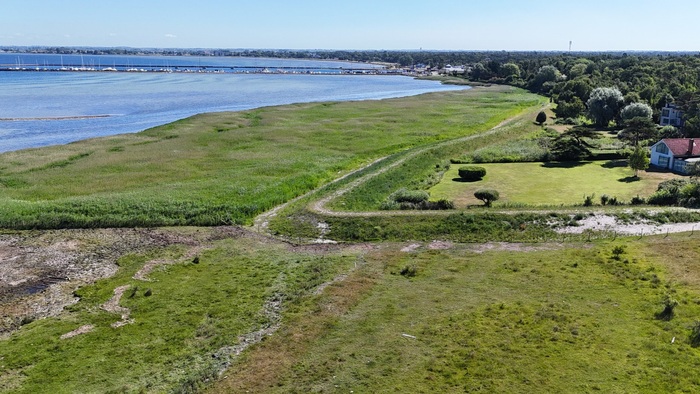
The scheme covers around nine kilometres of flood protection. About half of that length is built as earth embankments covered with existing vegetation, and about half as clad sheet piling of several different types. Construction starts in January 2027 and is expected to run for about three years.
The programme is sequenced around local constraints rather than around construction convenience. Work is timed to fit restrictions on a golf course crossed by the defences, and to avoid disturbing amphibians and nesting birds during their sensitive periods.
Coastal defence has become one of the steadier order sources for Nordic civil contractors, and the shape of this award explains why. Municipal flood schemes are slow to procure and long to build, which suits a contractor looking to fill its order book rather than to maximise margin on a single job. An extension awarded to the incumbent on the first two stages also carries materially less execution risk than a competitive first entry onto an unfamiliar site, because the ground conditions, the access routes and the approval constraints are already understood.
The environmental sequencing is the detail worth noting for anyone pricing similar work. Building half the length as vegetated earth embankments rather than engineered hard surfaces is cheaper in materials but far more exposed to seasonal windows, and a three year duration on a nine kilometre scheme implies long periods when parts of the site cannot be worked at all. Contractors bidding this kind of project are effectively pricing permitting conditions as much as earthworks.
Against group figures for last year of roughly SEK 56 billion in turnover and about 11,500 employees, an order of this size is small. Its value is in utilisation. Repeat municipal infrastructure work of predictable duration underpins a division whose larger projects arrive unevenly, and the listed group has been explicit that steady infrastructure volumes are part of how it manages that.