


Reach Subsea has reported higher third quarter revenue alongside an operating loss, and confirmed that it is negotiating a carve out of its uncrewed vessel business with a small number of parties.
Revenue for the quarter reached NOK 802 million, against NOK 688 million in the same quarter of the previous year. Earnings before interest and tax came in at negative NOK 56 million, compared with a positive NOK 51 million a year earlier. The order backlog stood at NOK 1.55 billion at quarter end, up from NOK 1.05 billion. The company put outstanding tender volume at NOK 9 billion, a figure it does not tie to a stated period or as at date.
Management attributed the weak result to lower project margins and lower fleet utilisation. Jostein Alendal, chief executive of Reach Subsea, and Arne Joa, chief financial officer, presented the quarter. The sale of the Viking Reach completed after the quarter closed, and the company expects to book accounting gains on it in the final quarter.
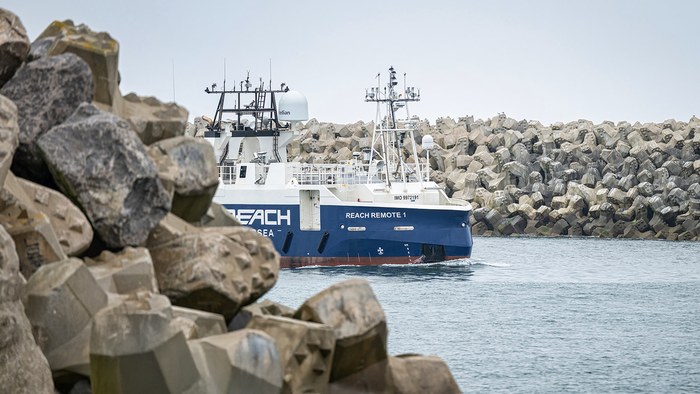
The more consequential disclosure is the carve out. Reach Remote 1 and Reach Remote 2, the company's uncrewed survey vessels, are working for clients in Norway, the United Kingdom and Australia, and the company is now in talks to spin that business into a standalone entity, working towards heads of agreement. That is a different proposition from a conventional subsea services firm reporting a soft quarter.
The strategic logic is visible in the numbers. A crewed offshore services business lives or dies on day rates and utilisation, which is precisely what pulled this quarter into a loss. An uncrewed platform with proven client deployments across three markets is valued on something closer to a technology multiple, and it is hard to realise that value while it sits inside a vessel operator's balance sheet. Separating the two lets each be priced on its own terms.
The risk runs the other way as well. Reach Remote is the part of the group that justifies a forward looking valuation, and a carve out that moves it to partial external ownership removes that story from the parent at a moment when the parent's core earnings are negative. Whether the transaction is read as crystallising value or as selling the best asset will depend on the terms, and those have not been published.