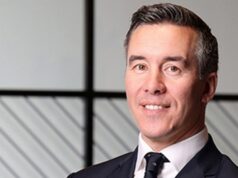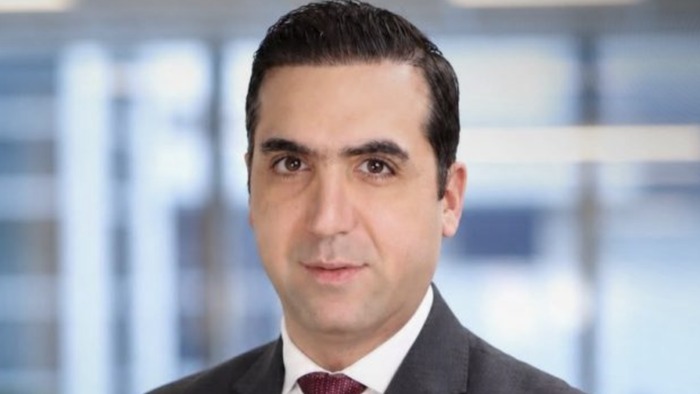
Syria has named Omar Samer Al-Halabi as chairman of the board of its sovereign wealth fund, placing a former KPMG partner at the head of the institution the transitional government is using to court foreign capital. President Ahmed Al-Sharaa issued the appointment by presidential decree on 18 October 2026, and the state news agency SANA carried it the same day.
The decree, numbered 191 of 2026, also names Al-Halabi an adviser on economic affairs to the presidency and adds him to the Supreme Council for Economic Development, the body created to steer investment strategy and economic planning. The remaining members of the fund's board were left unchanged, making this a single seat handover rather than a reconstitution. Al-Halabi succeeds Mazen Al-Salhani, who moved on to serve as minister of tourism, and the transition was presented as an orderly one.
A second decree signed the same day appointed Maher Khalil Al-Hassan to head the Syrian Petroleum Company, pairing the two moves as part of a wider refresh of the institutions closest to the country's economic recovery. Both decrees took effect on issuance.
Al-Halabi arrives with more than two decades of advisory work for governments, sovereign institutions and private sector organisations across the Middle East and international markets. He was most recently a partner at KPMG, where he led the economics and public policy advisory practice for the Middle East region, covering public sector reform, economic diversification and industrial policy. He has also worked with Saudi Arabia's Public Investment Fund, which gave him direct exposure to how a large sovereign investor is built, staffed and governed. He holds a master of business administration from IE Business School and has completed executive programmes at Harvard University, the Massachusetts Institute of Technology, Fudan University and the London School of Economics.
The fund he inherits was created by presidential decree during the first year of the transitional administration and sits at the centre of post conflict economic policy. It oversees investment projects and manages state assets, including holdings seized from businessmen tied to the government of Bashar Assad, which fell in December 2024. Its stated purpose is to channel outside capital into an economy damaged by thirteen years of war and still constrained by sanctions.
The appointment reads as a deliberate credibility signal. A transitional government that wants institutional money rather than bilateral grants has to present a counterparty that international investors recognise, and a partner from one of the big four accounting networks with Gulf sovereign experience is legible in a way a political appointee is not. The pairing of the chairmanship with an advisory seat inside the presidency cuts both ways. It gives the fund direct access to the decision maker, which speeds execution, and it blurs the separation between the state as policy maker and the state as asset owner that institutional investors usually probe first.
The harder question is governance rather than pedigree. A portfolio substantially made up of confiscated assets carries title risk that no amount of professional management resolves on its own, and the sovereign investors and development institutions Syria is courting will ask about audit, disclosure and the legal basis of those holdings before they ask about returns. Al-Halabi's time at the Public Investment Fund is relevant precisely there, because that institution's standing with global counterparties was built on reporting discipline and mandate clarity rather than on deal flow. Whether the Syrian fund publishes an audited balance sheet and a defined investment mandate during his first year will say more about the country's investability than any roster of partnership agreements it announces alongside them.