


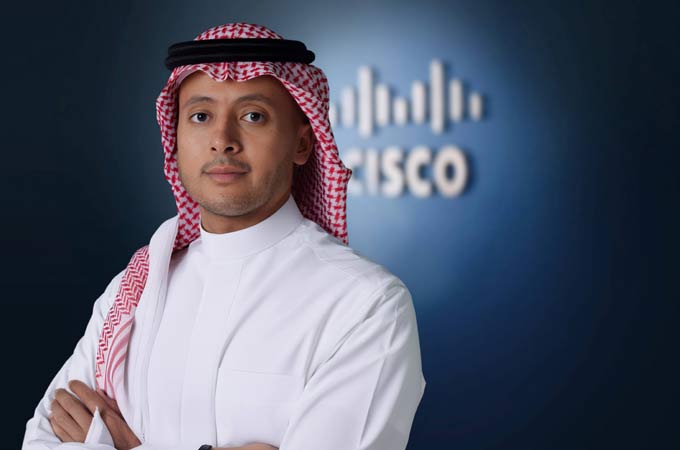
Cisco has appointed Bader Almadi as Vice President for Saudi Arabia, effective April 2026, positioning the company to accelerate its AI infrastructure investments and digital transformation initiatives across the Kingdom's priority sectors. Based in Riyadh, Almadi will oversee Cisco's strategy and commercial operations while building partnerships to drive artificial intelligence infrastructure in financial services, energy, entertainment, hospitality and sports industries. The appointment signals Cisco's deepening commitment to Saudi Arabia's Vision 2030 objectives at a moment when the company has already operationalized cloud data centers and expanded its regional headquarters to support growing demand for networking and security solutions.
Gordon Thomson, President of Europe, Middle East, and Africa at Cisco, cited Almadi's "deep connection to the Saudi technology ecosystem" and track record of driving digital initiatives as critical to steering the company's next growth phase in the Kingdom. No search firm involvement was mentioned in available announcements. Almadi noted that Cisco has been "fundamental in building the digital infrastructure that helps power Saudi Arabia's progress," framing the role as a pivotal opportunity to position the country's technological leadership as it advances toward Vision 2030 objectives.
Almadi brings more than two decades of technology and sales leadership experience, beginning his career with Cisco in 2006 as a service account manager before moving to Oracle in 2009, where he focused on financial services client management for four years. He subsequently joined EMC in an education sector management role, then advanced to Dell Technologies as Country Enterprise Director for telecommunications, cloud and financial services, managing relationships with Saudi telecom majors including STC, Zain and Mobily. Most recently, he served as Managing Director for Google Cloud Saudi Arabia from 2022 onwards, where he spearheaded the cloud provider's market entry in the Kingdom and orchestrated the launch of Google Pay in 2025. Beyond corporate roles, Almadi has advised Saudi Arabia's Ministry of Communications and Information Technology on international partnerships, represented the Kingdom at the G20 Summit's Digital Economy Taskforce and led initiatives at the World Economic Forum.
Cisco has operated in Saudi Arabia since 1997 and recently accelerated investments under a regional headquarters strategy approved by the Ministry of Investment. The company has established operational data centers for cloud security services and the Webex collaboration platform, committed half a million learners through its Networking Academy, and announced plans for a manufacturing base starting with wireless technology fulfillment operations in 2025. Cisco's multi-layered strategy includes a landmark 1 GW artificial intelligence infrastructure joint venture with AMD and HUMAIN, positioning the Kingdom within Cisco's global supply chain network alongside North America, Asia and Europe. The company also plans an AI Institute at King Abdullah University of Science and Technology and aims to provide free digital upskilling to 500,000 learners across artificial intelligence, cybersecurity, data science and programming over five years.
The appointment reflects a widening strategic trend in Saudi Arabia's technology sector, where multinational vendors are installing experienced local leaders to navigate complex policy relationships and emerging market opportunities. Almadi's boomerang move from Google Cloud back to Cisco, combined with his advisory roles across the Saudi government, suggests the company views his relationships and policy expertise as strategic assets at a moment when the Kingdom's AI ambitions are driving substantial infrastructure investment. Whether this appointment signals competitive pressure between cloud and networking vendors for influence over the Kingdom's digital architecture and procurement decisions remains to be seen, though Cisco's emphasis on open, secure AI infrastructure through partnerships with HUMAIN and academic institutions suggests the company aims to differentiate itself beyond traditional infrastructure roles.