


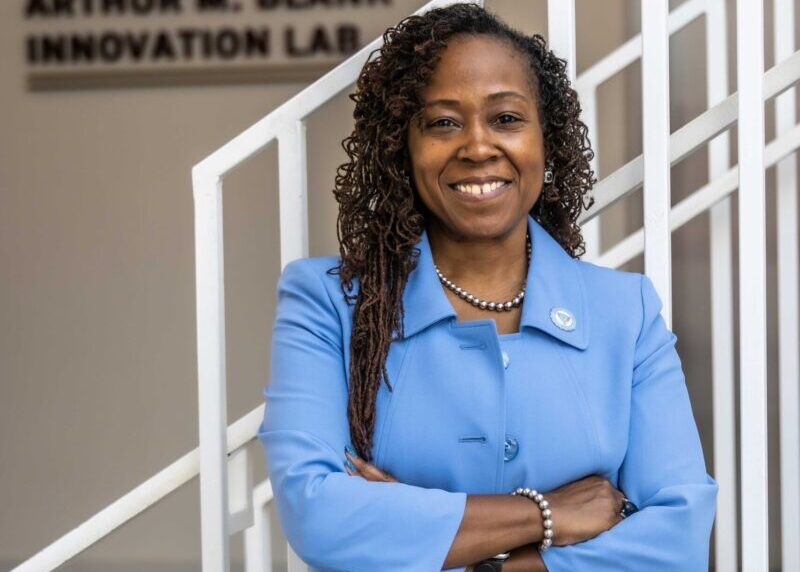
Spelman College announced Thursday that Dr. Ayanna Howard, a nationally recognized roboticist and pioneering artificial intelligence researcher, will become the institution's 12th president on August 1, 2026. Howard, currently dean of the College of Engineering at The Ohio State University, succeeds interim president Rosalind Brewer at the nation's top-ranked historically Black college for women, bringing three decades of leadership spanning academia, government and entrepreneurship.
The appointment culminates a comprehensive national search led by the Presidential Search and Nomination Committee in collaboration with executive search firm Isaacson, Miller. The process engaged trustees, faculty, staff, students and alumnae to identify a leader capable of advancing Spelman's educational mission while positioning the institution for continued growth. Lovette Russell, chair of Spelman's Board of Trustees and a 1983 alumna, praised Howard as the visionary leader the college needs. "Throughout this search process, we sought a leader who would honor Spelman's legacy while boldly advancing our future," Russell said. "She understands the opportunities and challenges shaping higher education today and shares Spelman's unwavering commitment to preparing Black women to lead and drive change."
Howard brings a distinctive background combining technical innovation with social impact. She earned her bachelor's degree in computer engineering from Brown University in 1993 and later received master's and doctoral degrees in electrical engineering from the University of Southern California, along with an MBA from Claremont Graduate University. Her career spans 12 years at NASA's Jet Propulsion Laboratory, where she served as a senior robotics researcher and deputy manager in the Office of the Chief Scientist, contributing to Mars exploration projects and autonomous rover development. At Georgia Tech, where she spent 15 years before joining Ohio State in 2021, Howard founded and directed the Human-Automation Systems Lab and chaired the School of Interactive Computing. She is the founding president of Zyrobotics, a company developing therapeutic and educational technologies for children with special needs, and co-founded Black in Robotics, an organization addressing representation gaps in the field. Howard has authored more than 300 peer-reviewed publications and holds memberships in the American Academy of Arts and Sciences, the National Academy of Inventors and the American Association for the Advancement of Science. Forbes named her to its America's Top 50 Women in Tech list, and the Association for Computing Machinery awarded her the 2021 Athena Lecturer Award for fundamental contributions to accessible human-robotic systems and broadening participation in computing.
Spelman College, founded in 1881 as the Atlanta Baptist Female Seminary, has established itself as a premier liberal arts institution with roughly 2,700 students. The college ranks number one among HBCUs for 19 consecutive years according to U.S. News and World Report and produces a disproportionate number of Black women who earn doctoral degrees in science, technology, engineering and mathematics. The institution maintains the highest graduation rate among HBCUs and serves as a model for academic excellence and social mobility. Its current priorities include the Spelman Forward campaign, a strategic fundraising initiative targeting scholarships, faculty development and institutional sustainability. Interim President Brewer, former CEO of Walgreens Boots Alliance, has led the college for 18 months and will transition to co-chair of the Spelman Forward campaign.
Howard's appointment signals the board's belief that her technical expertise and demonstrated commitment to expanding access in STEM education position her to lead a historically women's college through a period of technological transformation. Her prior experience mentoring Spelman students in robotics labs while based in Atlanta and her expressed focus on preparing students not merely to navigate a changing world but to shape it suggest she will emphasize both innovation and the institution's core mission of developing Black female leaders. The move also reflects broader trends in higher education leadership, where boards increasingly seek presidents with entrepreneurial track records and technology fluency alongside traditional academic credentials. Whether Howard can balance her engineering-focused background with the liberal arts ethos of Spelman and effectively compete for resources during economic uncertainty remains to be tested during her tenure.