

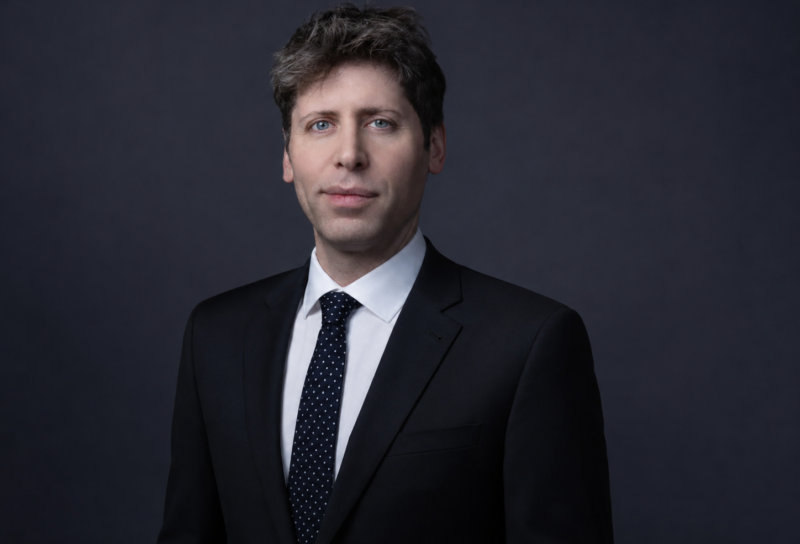
Sam Altman returned to OpenAI as chief executive on November 22, 2023, five days after being fired by the company's board in a dramatic reversal that exposed deep conflicts over how the artificial intelligence industry should develop. The startup replaced the entire board of directors with a new interim slate headed by former Salesforce co-CEO Bret Taylor, signaling investor and employee pressure had forced a governance overhaul at the maker of ChatGPT.
OpenAI announced the agreement late Tuesday following a weekend of internal upheaval. Greg Brockman, the co-founder and former president, returned to his role. Mira Murati returned as chief technology officer. The new three-member interim board includes former U.S. Treasury Secretary Larry Summers and Quora CEO Adam D'Angelo, the sole holdover from the previous board. Bret Taylor stated in a message to staff that the board would "build a qualified, diverse board" and focus on "strengthening OpenAI's corporate governance." The company said it would add additional board members and work to "enhance the governance structure" after the board had faced criticism for its nonprofit-controlled structure that allowed directors to unilaterally remove the CEO without consulting major investors.
Altman, 38, built his career through an early focus on technology entrepreneurship and venture capital mentorship. He co-founded Loopt, a location-based social network, at age 19 while a Stanford student; the company sold for $43.4 million in 2012. He then invested in venture capital through Hydrazine Capital with his brother, and joined Y Combinator as a part-time partner in 2011, becoming president by 2014 and overseeing expansion of the startup accelerator until he left in 2019. Altman co-founded OpenAI in 2015 with Elon Musk and others, became CEO in 2019, and oversaw the November 2022 release of ChatGPT, which reached 100 million users in two months.
OpenAI, headquartered in San Francisco, develops large language models and generative AI systems including the GPT family and ChatGPT. The company was founded as a nonprofit in 2015 with pledged commitments of $1 billion and later established a for-profit subsidiary. Microsoft has invested over $13 billion and is the exclusive cloud provider. The startup has become valued in the hundreds of billions of dollars and generated roughly $1 billion in revenue run rate by mid-2023, driven by consumer interest in ChatGPT following its public launch.
The appointment signals a victory for Altman and investors over safety-focused board members in a dispute rooted in fundamentally different visions for AI development. The ousted board, led by chief scientist Ilya Sutskever and others, had expressed deep concerns about rapid commercialization and questioned whether Altman was being sufficiently candid. After Altman's firing, nearly all 770 OpenAI employees signed a letter threatening to resign unless the board resigned and Altman returned. Microsoft, which had begun hiring Altman and Brockman for a new internal AI research team, effectively used the job offer as leverage in negotiations. The reinstatement reflects investor and employee conviction that Altman's leadership and focus on scaling ChatGPT is essential to OpenAI's mission and competitive position, even as questions about AI safety governance at the company remain unresolved.