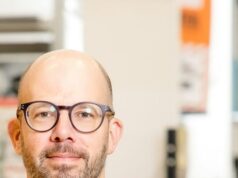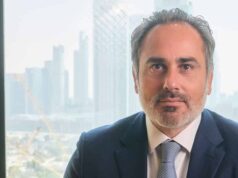


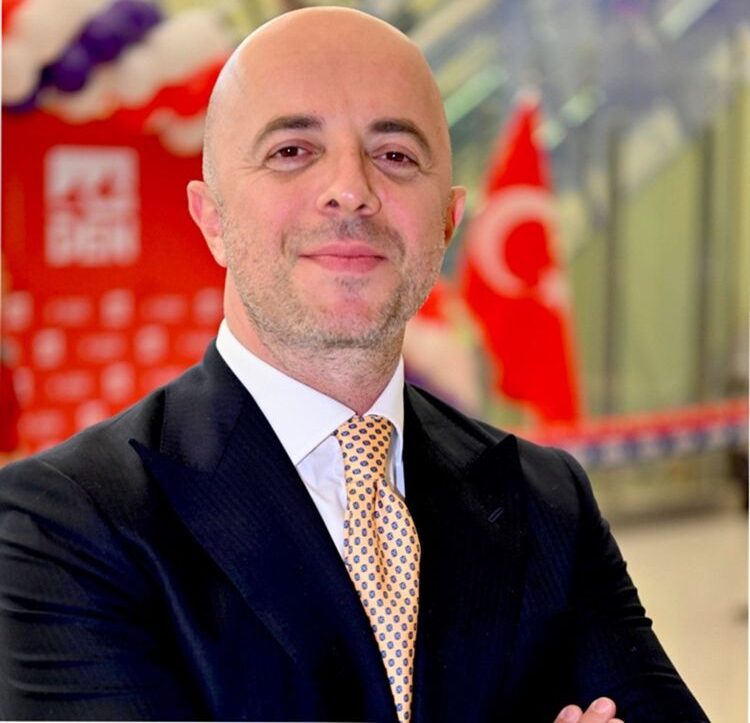
Turkish Airlines has replaced its chief executive and chairman of the board as the flag carrier undertakes a sweeping management reshuffle aimed at repositioning for continued global expansion amid mounting regional geopolitical pressures. Ahmet Olmüştur, previously chief commercial officer, was appointed chief executive on April 9, 2026, succeeding Bilal Ekşi, who has retired after leading the airline since 2016. Murat Şeker, the airline's chief financial officer for the past decade, becomes chairman, replacing Ahmet Bolat, who stepped down after more than four years in the role.
The reshuffle extends across the executive committee. Metin Gülşen, previously senior vice president of accounting and financial control, has been promoted to chief financial officer. Harun Baştürk, formerly senior vice president for regional sales, assumes the role of chief commercial officer. The airline said the new structure is designed to support its long-term objectives, backed by a focus on human capital and service delivery. The appointments place operational and commercial experience at the centre of decision-making, with both the new CEO and chairman having spent significant parts of their careers within the organisation. Separately, Turkish Airlines announced it would retain all of its 2025 net profit of 118.2 billion Turkish lira ($2.65 billion) instead of distributing a dividend to shareholders, citing uncertainty tied to conflict in the Middle East.
Olmüştur, born in Istanbul in 1980, began his career with Turkish Airlines in 2000 as a part-time call centre employee. He holds a bachelor's degree in business administration from Marmara University and earned an MBA through a rotational program at Long Island University, European Business School London, and Pôle Universitaire Léonard de Vinci in Paris. Over two decades, he progressed through roles in revenue management, pricing, and global distribution systems before becoming senior vice president of revenue management. He served as chief marketing and sales officer from 2014 until 2024, when he transitioned to chief commercial officer. In that capacity, he oversaw network planning, sales strategy, customer experience, and the Miles&Smiles loyalty programme. He also holds board positions at SunExpress, the leisure airline half-owned by Turkish Airlines, and Turkish Technic, the group's maintenance subsidiary. Olmüştur is a member of the IATA Distribution Advisory Council and the Turkish National Olympic Committee.
Şeker earned an undergraduate degree in industrial engineering from Marmara University and holds a master's degree in economics from Sabancı University and a PhD in economics from the University of Minnesota. Between 2008 and 2013, he worked as an economist at the World Bank, contributing to policy research on innovation, entrepreneurship, and international trade. He subsequently held the position of senior vice president of financial institutions and investor relations at Ziraat Bank, a state-owned Turkish lender, overseeing funding and investor relations. He joined Turkish Airlines as chief financial officer in July 2016, where he managed financing, treasury operations, accounting, procurement, and investor relations. Since March 2021, he has served on the airline's board and executive committee. He became chair of the International Air Transport Association's Financial Advisory Council in 2025 and holds board positions at Turkish Technic and SunExpress.
Turkish Airlines operates the world's largest international route network by number of destinations and is majority state-owned. The carrier reported robust operational performance in the first quarter of 2026, with passenger traffic up 16 percent year-on-year to 7.2 million in March and 12.7 percent to 21.3 million passengers in the January-March period. The fleet expanded 11.9 percent to 528 aircraft. Yet the airline faces mounting headwinds; global carriers are contending with flight restrictions and elevated fuel costs amid volatility in the Middle East. Turkish Airlines' geographic footprint makes it particularly exposed to regional disruptions, as it connects Europe, Asia, Africa and the Americas through its Istanbul hub. The decision to retain earnings rather than distribute a dividend signals the new leadership's more cautious approach to capital deployment. The appointment signals a pairing of a financially focused chairman with a commercially experienced chief executive, a combination that industry analysts say suggests an emphasis on profitability and disciplined growth as the airline pursues its 2033 roadmap, which includes expanding the fleet to over 800 aircraft. Both executives represent continuity; the succession marks an internal promotion rather than an external hire, which the airline said reflects a long-term succession plan rooted in deep operational knowledge.