


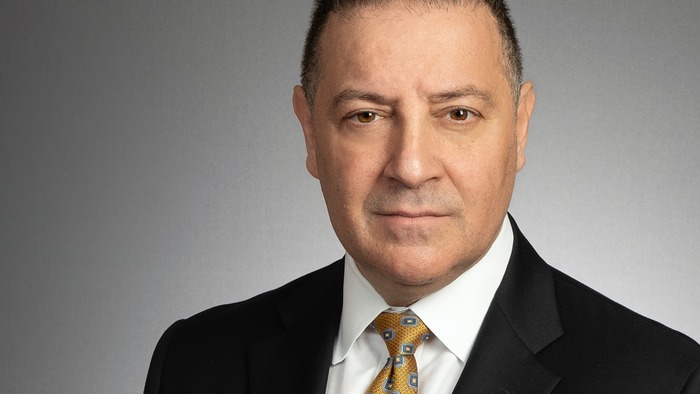
The board of General Dynamics has elected Danny Deep, the group's president, as Chief Executive Officer, with effect from the start of next year. The decision hands one of the largest defence contractors in the United States to a twenty five year company insider.
Phebe Novakovic, who has led the group since 2013, becomes executive chairman in an orderly transition and will continue with the company. The handover has been set out as a planned succession rather than a change of direction, with the incoming chief executive drawn from the operating side of the business he will now run.
Deep has risen through positions of increasing responsibility across the group's heaviest industrial units. Before becoming president in 2025 he was Executive Vice President of Global Operations and, earlier, Executive Vice President of Combat Systems. He also served as President of General Dynamics Land Systems, the armoured vehicles business, which places his formative experience squarely in manufacturing and programme execution rather than in corporate finance.
"Danny is a highly skilled executive with rich operating experience," Novakovic said, adding that she looks forward to continued collaboration with him.
Laura J. Schumacher, the independent lead director, thanked Novakovic for building a clear strategic vision and a strong leadership team. "We have every confidence that he will continue the outstanding leadership and legacy that Phebe has exemplified," she said of Deep.
Deep credited Novakovic with excellent leadership, said he was grateful for their partnership, and described himself as honoured and thankful to have been selected.
The appointment is consequential beyond the company. General Dynamics spans combat systems, marine systems including the submarine programmes that sit at the centre of United States naval shipbuilding, technologies and information services, and Gulfstream business aviation. Few industrial portfolios in the country are as exposed at once to defence procurement cycles, to shipyard capacity constraints and to the discretionary spending of corporate and private aircraft buyers.
Elevating an operator rather than a financier reads as a signal about where the board believes the pressure now sits. The binding constraint across United States defence primes in recent years has been execution, specifically the ability to recruit skilled labour, to hold schedule on long cycle programmes and to absorb cost growth on fixed price work, rather than the ability to win orders. A chief executive whose career was built in combat vehicles and global operations is an answer shaped to that problem.
The retention of the outgoing chief executive as executive chairman also matters for continuity. Novakovic led the group through more than a decade that included substantial changes in the defence budget environment and in the composition of the portfolio, and her presence on the board preserves institutional memory through a transition that will run across a full planning cycle.
Deep takes the role with the group's strategic shape already settled, which frames his early mandate as one of delivery against commitments already made rather than redefinition of the business.