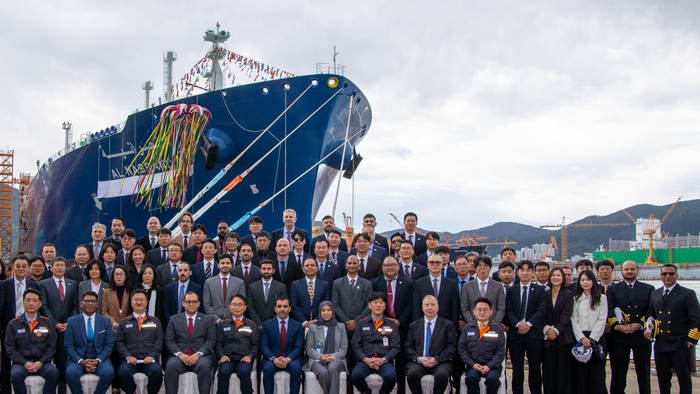
Qatar Gas Transport Company Limited (Nakilat) has named nine new vessels, seven liquefied natural gas carriers and two carriers built for liquefied petroleum gas and ammonia, at three South Korean shipyards. The company announced the milestone on 2 November 2026.
The seven LNG carriers named are Al Ghuwair, Al Jazi, Al Mirzam, Maqdeem, Al Nasraniya, Energy Vigour and Energy Voyager. The two LPG and ammonia carriers are Energy South and Energy East. Five of the LNG carriers belong to a programme to build twenty five conventional size LNG carriers at HD Hyundai Heavy Industries and Hanwha Ocean. Nakilat will fully own and operate all twenty five and charter them to QatarEnergy affiliates under long term agreements. The remaining two LNG carriers and both gas carriers come from a six vessel newbuild programme at HD Hyundai Samho.
Chief Executive Officer Abdullah Al Sulaiti framed the naming as tangible progress in the company's long term investment in expanding its fleet, and tied the programme to Qatar's North Field expansion projects.
The scale of the commitment is what separates this from a routine fleet renewal. Nakilat's orderbook stood at forty vessels under construction in South Korea and China at its most recent quarterly statement, which is a larger newbuild position than most listed shipowners carry across an entire cycle. Naming nine of them at a single ceremony compresses what would ordinarily be spread over several yard visits, and it signals that first phase deliveries are running to schedule rather than slipping.
The ownership model matters as much as the tonnage. By owning the twenty five conventional carriers outright and chartering them to QatarEnergy affiliates on long term terms, Nakilat converts the North Field expansion into contracted revenue rather than exposure to spot charter rates, which have been volatile across the LNG trades. That structure insulates earnings from the shipping cycle, at the cost of locking capital into assets whose returns are fixed at contract signature rather than repriced as the market moves.
The two LPG and ammonia carriers point somewhere else again. Ammonia is the marine fuel the shipping industry has spent several years arguing about, and dual capability tonnage ordered now will be in service well before the regulatory position settles. Nakilat is not alone in hedging that way. It is unusual in doing so from a position where its core LNG business is already fully contracted, which means the option is being bought out of strength rather than as a defensive move.