


Dubai International Financial Centre (DIFC) is targeting 1,000 artificial intelligence companies and 5,000 jobs in the AI economy by 2030, after Dubai AI Campus reached its previous 500-company ambition two years ahead of schedule.
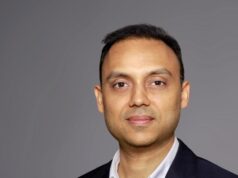
Arif Amiri, chief executive officer of DIFC Authority, outlined the new targets during his opening remarks at the Dubai AI Festival 2026, saying artificial intelligence is changing how people work, businesses operate, capital is deployed and economies compete.
Amiri said cities have historically competed on geography, trade, connectivity and capital, but intelligence has now become an equally important factor. The question, he said, is no longer whether AI will transform economies, but how that transformation will be shaped.
Dubai’s technology strategy predates the current AI wave. Amiri said the emirate began investing in its digital economy more than 25 years ago by developing technology clusters, digitizing government services and investing in connectivity.
He said the underlying approach has remained consistent despite changes in technology: building early, moving quickly, attracting leading talent and creating an environment in which ideas can become businesses capable of expanding globally.
DIFC followed a similar model after its launch in 2004, with the ambition of developing a world-class financial center connecting East and West. Its foundations were built around trust, regulation, law, infrastructure and talent, while its focus subsequently expanded into financial technology, digital assets, innovation and artificial intelligence.
AI ambitions expand
DIFC had 10,018 active registered companies at the end of the first half of 2026, according to its official H1 results, after adding 2,318 new active companies over the preceding 12 months. The number of regulated financial services firms reached 1,134, up 16 percent year on year.
Dubai also ranks ninth globally in the latest Global Financial Centres Index, keeping it among the world’s top 10 financial centers. The September 2026 GFCI 40 ranking gave Dubai a rating of 750.
Amiri said developing a financial center was never intended to be the final destination for DIFC. The wider objective was to help shape the future of finance, leading the center from conventional financial services toward FinTech, digital assets, broader innovation and now AI.
Artificial intelligence, he said, is no longer simply another technology sector but is becoming part of the economic infrastructure itself, influencing regulation, risk management, customer service, decision-making and how people work alongside technology.
Earlier in 2026, DIFC announced its ambition to become what it describes as the world’s first AI-native financial center, embedding AI across its legal and regulatory frameworks, business operations, talent development systems, ecosystem infrastructure and physical environment.
Amiri distinguished between enhancing existing systems using AI and designing systems to be AI-native from the outset. DIFC’s objective, he said, is not simply to add artificial intelligence to its existing structure but to rethink how a financial center should operate in an AI-driven world while maintaining responsibility, security and trust.
Customer service transforms
The transformation is already extending into DIFC’s own operations. Amiri said artificial intelligence currently supports more than 30 percent of customer-service activities across the center.
DIFC aims to increase that proportion to 50 percent by the end of 2026, followed by 100 percent AI-supported customer service by the end of 2027.
Amiri said DIFC is developing, implementing and expanding these capabilities internally, arguing that ambition only becomes meaningful when it is translated into action. He said the organizations that shape the future of artificial intelligence will be those able to deploy the technology responsibly and at scale.
The approach forms part of DIFC’s wider AI-native strategy. When the initiative was formally announced in April, DIFC said its Native AI program was expected to generate $3.5 billion, or AED12.9 billion, in economic benefits and 25,000 jobs. The program envisages AI being embedded in enterprise workflows, compliance systems and financial-services delivery while extending into areas such as AI agents, robotics, autonomous mobility, digital twins and intelligent infrastructure.
DIFC has also said it intends to become the leading global destination for AI-in-finance companies, supported by an ecosystem combining regulation, training, computing capabilities and physical AI infrastructure.
Its H1 2026 results showed that AI, FinTech and innovation companies across the wider DIFC ecosystem reached 1,933, an increase of 39 percent year on year, after the Innovation Hub welcomed 361 new companies during the first half.
Campus target raised
Dubai AI Campus has become a central component of that expansion. DIFC originally announced the AI and Web 3.0 Campus in June 2023, targeting more than 500 AI and Web3 companies, over $300 million in collective funds and more than 3,000 jobs by 2028.
The Dubai AI Campus cluster was subsequently inaugurated in 2024, when its first phase had more than 75 registered businesses. Its second phase was designed to expand the campus beyond 100,000 square feet while attracting more than 500 companies.
Amiri said at the Dubai AI Festival that the 500-company ambition has now been achieved two years ahead of the 2028 deadline, prompting DIFC to raise its goal to 1,000 AI companies and 5,000 AI-economy jobs by 2030.
He said competition in artificial intelligence will extend beyond technology itself to include talent, capital, ideas and trust, with DIFC seeking to bring those elements together and create conditions that allow innovation to scale.
Amiri said the importance of the Dubai AI Festival lies in connecting entrepreneurs, investors, technology leaders, policymakers and researchers from around the world. Success, he added, should be measured not simply by attendance but by ideas becoming businesses, partnerships crossing borders, capital reaching innovation and talent finding opportunities.
Dubai’s digital and financial-development strategies are now converging around technology, capital, human capability and artificial intelligence, he said, with the objective of creating an environment where technology strengthens human potential and trusted innovation can operate at scale.