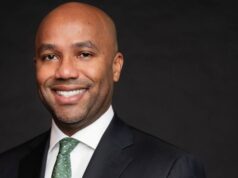



Potentially AI has appointed Oliver Yonchev as chief executive officer with immediate effect, promoting an existing executive director into the top job in a board reshuffle announced by regulatory news service. The AIM-quoted company set out the change alongside a set of senior management appointments that together amount to a reset of its leadership structure.
Yonchev moves up from executive director. He is better known in the market for his previous role as chief executive of Social Chain, the social media and marketing group, and later for his work at Flight Story, which gives him a profile in the consumer marketing world that is unusual for the chief executive of a small quoted artificial intelligence company. That profile cuts both ways. It brings attention and a network, and it also invites the question of whether a marketing operator is the right person to run a technology business whose value rests on what its systems actually do.
In the same announcement Sukhveer Sanghera, co-founder and chief architect, stepped down from the board with immediate effect. The company did not frame the two moves as linked, and Sanghera's departure from the board does not of itself say anything about his continued involvement in the technical work. A co-founder leaving a board while a new chief executive is installed is nonetheless the kind of change investors in a company of this size read closely, because the technical founder is often the asset.
Arfan Chaudhry was named chief product officer in the same announcement, a functional appointment that sits below the level this publication normally covers but which matters here as evidence of what the board is building. A chief executive drawn from commercial and marketing leadership paired with a dedicated product officer is a conventional structure for a company trying to move from a founder-led technical proposition to a repeatable commercial one.
The company reached AIM through a reverse takeover of the former Tiger Alpha shell, and its public market history is therefore short. Companies that arrive on the market by that route carry a particular burden of proof: the listing is real but the trading record under the current business is thin, and the market tends to judge them on management quality and disclosure discipline until there are enough results to judge them on numbers. A leadership change this early in that process is a significant event.
The commercial backdrop is a market in which a great many small companies have attached an artificial intelligence description to businesses of widely varying substance. Investors have become correspondingly sceptical, and the premium has shifted to companies that can show paying customers rather than announced partnerships. The incoming chief executive's immediate task is therefore less about strategy than about evidence, and the first set of results delivered under his name will carry disproportionate weight.
The company's own board page had not been updated to reflect the new title at the time of writing, still listing Yonchev under his previous role, which is a common lag at a company of this size and not a contradiction of the regulatory announcement.
Neither the company nor the board gave a reason for the timing of the change, and the announcement carried none of the language of disagreement that would signal a contested departure. The structure that emerges is a smaller board with a commercially oriented chief executive and a named product owner, which is a legible shape for a company at this stage even if it is not yet a result.