

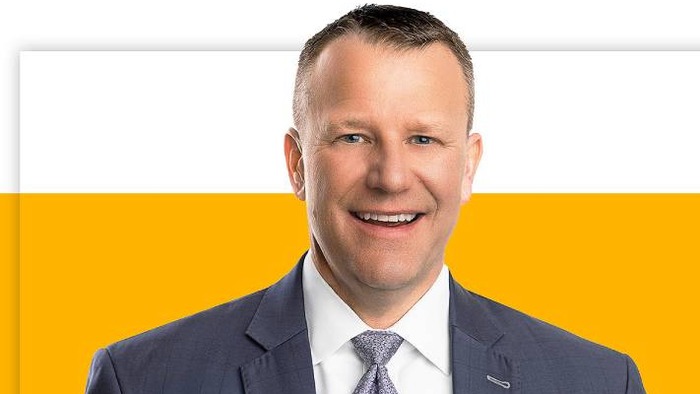
Stryker has named Spencer Stiles as its next chief executive, promoting the medical device maker's president and chief operating officer to the top job from the start of next year.
Stiles will also join the board. Kevin Lobo, who has led Stryker since the start of the last decade, becomes executive chairman, an arrangement the company set out in its announcement and in a filing with the Securities and Exchange Commission. The handover is scheduled for the first of January, which gives the incoming chief executive a clean start to the financial year.
An internal successor with the operating record
Stiles has been president and chief operating officer since late last year, and before that was group president for orthopaedics and spine, the division that contains Stryker's largest and most competitive franchises. He has spent his career at the company.
Running orthopaedics and spine is the relevant qualification. It is the business where Stryker's Mako surgical robot has been the central competitive weapon, converting hospital accounts to its implants by placing a capital asset in the operating theatre first. That strategy is the clearest example of the company's approach to growth, and the executive who executed it is now running the whole company.
The succession itself has been visible for a year. Creating a president and chief operating officer role and filling it internally is the standard signal that a board has chosen its next chief executive, and the executive chairman arrangement for the outgoing leader is the standard way of making the transition orderly rather than abrupt.
What Stiles inherits
He takes over a company in considerably better shape than most of its peers. Stryker has delivered organic growth ahead of the medical device sector for an extended run, has integrated a long series of bolt on acquisitions, and has built a position in surgical robotics that competitors have been slow to match. The problem of succession at a company performing well is that the new chief executive's room to differentiate himself is limited and the downside of change is asymmetric.
Three pressures are nevertheless building. The first is pricing: hospital groups in the United States have consolidated their purchasing and implant pricing has been under sustained pressure, which the robotics strategy mitigates but does not remove. The second is competition in robotics, where rivals have now launched systems and the first mover advantage narrows each year. The third is geography. Stryker's growth outside the United States has lagged its domestic performance, and the large opportunities in China and the Gulf come with procurement regimes, volume based tendering and local content expectations that a company built on American hospital selling has had to learn.
Capital allocation is the fourth question and the one most within his control. Stryker has grown substantially through acquisition, and whether the new chief executive continues at that pace or consolidates what the company already owns will be the clearest early read on his intentions.
About Stryker
Stryker is an American medical technology company headquartered in Kalamazoo, Michigan, making orthopaedic implants, surgical equipment, neurotechnology and medical and surgical products. It is listed on the New York Stock Exchange.