


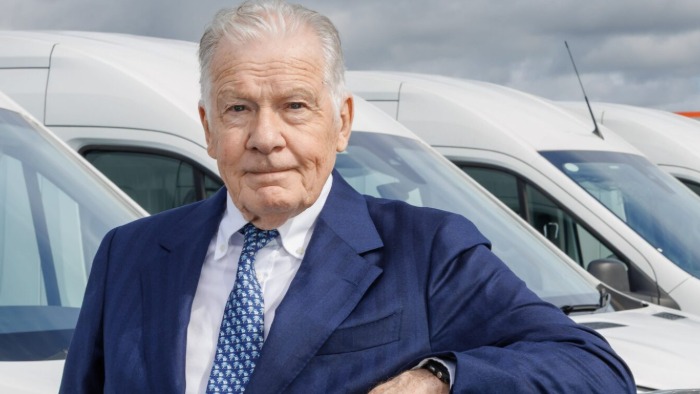
Harris Rentals has appointed Mike Williams as Managing Director, in an announcement made on the eighth of September 2026 and reported by the Irish and United Kingdom commercial vehicle trade press. Williams will lead the creation and future development of the operation.
Harris Rentals is a newly launched standalone commercial vehicle rental business created by Harris Group, the Dublin headquartered commercial vehicle distributor and retailer whose brands include MAXUS, HIGER, Isuzu and SINOTRUK. The new business is being established as a separate entity rather than as a rental desk within the existing distribution operation.
Williams brings a career built in vehicle rental. He held earlier roles at Hertz and Avis before a long period with Dawson Group, the commercial vehicle rental and contract hire business. That depth of tenure in specialist rental gives him direct exposure to the full cycle of the asset heavy rental model, including fleet procurement, utilisation management, maintenance provision and residual value risk.
The commercial reasoning behind the launch is visible in the structure of the market. A distributor of commercial vehicles earns its margin primarily at the point of sale and through aftersales service. A rental business earns its return over the life of the asset, through utilisation rates, contract pricing and the disposal value of vehicles at the end of the hire period. The two models draw on the same supply relationships and the same workshop infrastructure but have very different capital profiles and very different risk. Moving into rental allows a distributor to place volume, to retain the customer relationship across a longer period, and to capture value from the asset twice, but it requires balance sheet commitment and disciplined fleet management.
Demand conditions in the commercial vehicle sector also favour rental. Operators facing uncertainty over emissions regulation, the pace of transition to electric and alternative fuel vehicles, and volatile freight demand have become more reluctant to commit capital to outright purchase. Rental and flexible hire allow a business to match fleet size to workload and to avoid taking residual value risk on a technology that may be superseded. That is particularly relevant for a group whose brand portfolio spans conventional and electric light and heavy commercial vehicles, because rental provides a low commitment route for operators to trial vehicles they might not buy outright.
Establishing the business as a standalone operation rather than a division is a meaningful structural choice. A separate business can build its own commercial identity, serve customers who buy their vehicles elsewhere, and be measured on its own returns rather than being treated as a support function for vehicle sales. It also requires its own leadership, systems and fleet, which explains the decision to recruit a managing director with a long rental background rather than to promote from within the distribution business.
For the Irish and United Kingdom commercial vehicle markets, the launch adds a new competitor in a segment dominated by established rental and contract hire groups. The immediate questions for the market will be the scale and composition of the initial fleet, the geographic footprint of depots, and whether the business competes on short term flexible hire, longer contract hire, or both. The mandate to lead the creation of the operation suggests those decisions remain to be set out.