


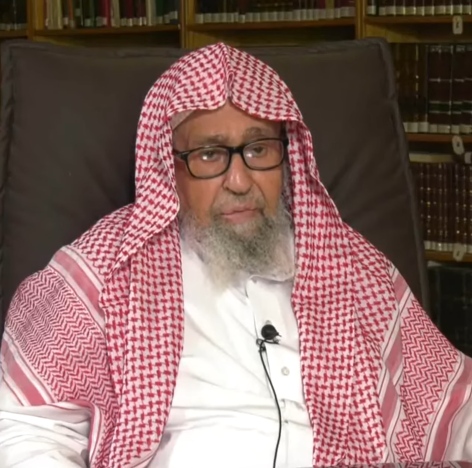
Saudi Arabia appointed Sheikh Saleh bin Fawzan Al-Fawzan, 90, as Grand Mufti on October 22, 2025, by royal decree, filling the kingdom's highest religious position less than a month after the death of his predecessor. The appointment, recommended by Crown Prince Mohammed bin Salman and endorsed by King Salman, marks a significant moment in Saudi Arabia's religious leadership as the kingdom balances social modernization efforts with continuity in its traditional Islamic establishment. Al-Fawzan will also serve as Chairman of the Council of Senior Scholars and President of the General Presidency of Scholarly Research and Ifta, the body tasked with issuing official religious legal opinions, or fatwas, that guide legal and social matters throughout the kingdom.
The appointment follows the September 23 death of Sheikh Abdulaziz Al-Asheikh, who had served as Grand Mufti since 1999 and represented a quarter-century of religious leadership under a single figure. The Saudi Press Agency and royal officials provided no formal explanation for the selection of Al-Fawzan from among members of the Council of Senior Scholars, the kingdom's highest religious body. The move appears to represent continuity rather than institutional reform; observers note that younger and more reform-minded scholars, including Muhammad al-Issa, former Minister of Justice and now Secretary General of the Muslim World League, were available candidates but were not selected. Al-Fawzan is the fourth person to hold the position since the office was established in 1953, and notably the first non-member of the Al ash-Sheikh family to serve since 1953, breaking with a historical pattern of the role going to descendants of Muhammad ibn Abd al-Wahhab.
Al-Fawzan was born September 28, 1935, in Al-Shamasiya, Qassim province, and became an orphan early in his life, raised by his extended family. He studied the Quran under the local mosque imam and enrolled in the public school in 1950, completing primary education at Al-Faysaliyyah School in Buraydah by 1952. He worked briefly as a primary school teacher before joining the Institute of Knowledge in Buraydah in 1954, graduating in 1958. He then attended the College of Sharia in Riyadh, earning his undergraduate degree in 1961 and subsequently obtaining a master's degree with a thesis on Islamic inheritance law and a doctorate focused on Islamic dietary rules. His career in the Saudi religious establishment spanned decades, including positions teaching at the Institute of Knowledge, the College of Sharia, the College of Fundamentals of Religion, and the Higher Institute of Judiciary, where he served as director. He has been a member of the Council of Senior Scholars since 2013 and previously served as head of Saudi Arabia's Supreme Court of Justice. Al-Fawzan is known for his conservatism within the Salafi movement and has authored numerous works on Islamic jurisprudence. He studied under former Grand Mufti Abdulaziz bin Baz, who profoundly influenced his methodology for issuing fatwas. Al-Fawzan serves as imam and teacher at Prince Mutaib bin Abdulaziz Al Saud Mosque in Riyadh and participates in the widely broadcast radio program Nur Ala ad-Darb, which features senior scholars answering religious questions.
The Grand Mufti position represents the highest-ranking religious and legal authority in Saudi Arabia. The office serves as the leading figure in issuing fatwas on legal, social, and ethical matters, with interpretations that carry significant weight in the Saudi judicial system, which is based largely on Islamic Sharia law. The Grand Mufti chairs the Council of Senior Scholars, which advises the monarchy on doctrinal matters, and heads the Permanent Committee for Scholarly Research and Ifta, which oversees the preparation and issuance of official fatwas and conducts scholarly research on Islamic jurisprudence. The position was established in 1953 by King Abdulaziz and has historically reinforced strict Wahhabi interpretations, though the role has evolved to address contemporary issues including Islamic banking, technology, and global religious outreach.
Al-Fawzan's appointment signals a deliberate choice to prioritize doctrinal continuity over reform in Saudi Arabia's religious hierarchy, despite Crown Prince Mohammed bin Salman's sweeping modernization agenda that has reduced the authority of the religious police, expanded women's rights, and opened entertainment and tourism sectors previously considered taboo. The selection of a 90-year-old deeply conservative scholar suggests that while Saudi society is undergoing rapid change, the state has determined that its religious establishment should remain anchored in traditional jurisprudential frameworks. Some analysts have interpreted the appointment as reflecting the Crown Prince's pragmatic approach to managing religious institutions; by selecting the most senior available scholar from the Council, the decision follows established protocol while forestalling potential institutional challenges. However, Al-Fawzan's appointment has drawn criticism from human rights organizations concerning his public statements about minority Muslim sects, particularly the Shia population, which he has described using derogatory terminology. The appointment underscores a tension at the heart of Saudi Arabia's governance model: the pursuit of economic and social liberalization alongside the maintenance of conservative religious authority structures that legitimize state policies and provide guidance on Islamic doctrine to Muslims both inside and outside the kingdom.