

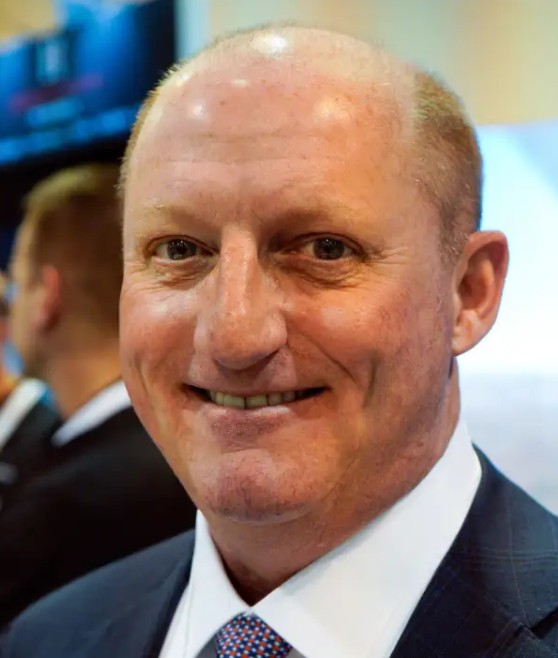
Greg Abel officially became chief executive officer of Berkshire Hathaway on January 1, 2026, inheriting a 1.1 trillion dollar conglomerate from Warren Buffett after the legendary investor's retirement following a six-decade tenure. The Canadian executive's appointment marks a watershed moment for one of the world's most influential companies, with Abel wasting little time in reshaping the investment strategy inherited from his predecessor. Buffett, now 95, remains as board chairman, but operational decisions rest with Abel, a 63-year-old Calgary-born accountant who has worked within the Berkshire ecosystem for more than two decades.
The appointment represented a widely anticipated transition, with Buffett announcing Abel's elevation at the company's May 2025 shareholder meeting and formally requesting the board's approval at the following day's board session. The board unanimously approved the succession, with no search firm involvement disclosed. Buffett had publicly identified Abel as his successor in 2021, granting investors several years to become acquainted with the incoming CEO. In his final shareholder letter, dated November 2025, Buffett expressed confidence in Abel, stating that his successor "has more than met the high expectations I had for him." The transition occurred with minimal market turbulence and has since proven pivotal as Abel has commenced a strategic reorientation of Berkshire's sprawling portfolio and capital allocation philosophy.
Abel was born June 1, 1962, in Edmonton, Alberta, and earned a bachelor's degree in commerce with a major in accounting from the University of Alberta in 1984, graduating with distinction. He holds a certified public accountant credential and began his career at PricewaterhouseCoopers in Edmonton. His path to Berkshire wound through CalEnergy, where he worked alongside mentors David Sokol and Walter Scott, executives who shaped his operational approach and capital discipline. In 1992, Abel joined MidAmerican Energy, which Berkshire acquired a controlling stake in during 1999, effectively integrating Abel into the conglomerate. He became MidAmerican's chief executive in 2008, guiding the utility through two decades of expansion before stepping down as CEO in 2018 while remaining as chairman. In January 2018, Abel was elevated to vice chairman of Berkshire for non-insurance operations and joined its board of directors, positioning him to oversee the company's BNSF railroad, See's Candies, Dairy Queen, and dozens of manufacturing and retail subsidiary operations alongside his energy portfolio responsibilities. Buffett's late partner Charlie Munger once described Abel as "just sensational at being a business leader, both as a thinker and as a doer."
Berkshire Hathaway operates as a multinational conglomerate headquartered in Omaha, Nebraska, with nearly 400,000 employees spanning insurance, energy, manufacturing, retail, and financial services divisions. The company owns major insurers including Geico, the BNSF railroad, Precision Castparts, utilities under the Berkshire Hathaway Energy banner, and consumer brands such as Dairy Queen, See's Candy, and Helzberg Diamonds. Berkshire's investment portfolio exceeds 300 billion dollars, encompassing positions in major public companies including Apple, Bank of America, and American Express. The conglomerate generated substantial operating revenue growth, with analysts attributing much of its historical outperformance to Buffett's stock-picking acumen and capital allocation discipline deployed across six decades.
Abel's leadership appears to signal a departure from Buffett's passive, hands-off approach to subsidiary management and portfolio construction. In the first six months of 2026, Abel increased Berkshire's Alphabet holdings by 224 percent, tripling the stake to nearly 58 million shares worth approximately 17 billion dollars by quarter-end, a move that would have been uncharacteristic of Buffett, who historically held technology companies at arm's length. Abel simultaneously deployed 2.6 billion dollars into Delta Air Lines stock, returning Berkshire to an airline investment after Buffett exited the entire U.S. carrier portfolio in 2020 on pandemic concerns. The CEO also initiated a position in Macy's valued at 55 million dollars, signaling comfort with unfamiliar territory. Beyond portfolio rebalancing, Abel announced the acquisition of homebuilder Taylor Morrison for 6.8 billion dollars in June 2026, followed by the resumption of share buybacks. The company repurchased 4.5 billion dollars of its own stock in the second quarter, the largest such amount in several years. These actions suggest Abel intends to operate more actively within Berkshire's existing holdings while deploying capital toward whole-company acquisitions, a marked shift from Buffett's traditionally opportunistic, discipline-first philosophy. Analysts appear cautiously constructive, with industry observers viewing share repurchases and operational consolidation as reasonable capital deployment decisions for a company holding nearly 365 billion dollars in cash, though Abel's willingness to embrace technology investing and aircraft manufacturers contrasts sharply with his predecessor's long-stated skepticism of both sectors.