

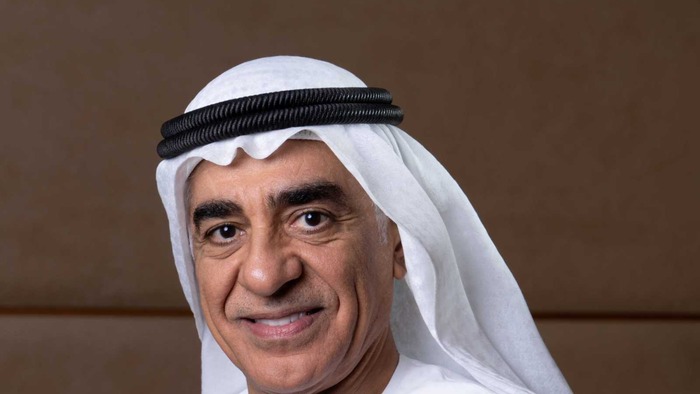
Dubai Islamic Bank has appointed Fadhel Abdulbaqi Al Ali as chairman of its board of directors with effect from 30 September 2026, filling a seat that had been vacant for ten days following an unscheduled departure.
The bank is the largest Islamic lender in the United Arab Emirates and one of the largest in the world by assets, and the chairmanship is among the more consequential board positions in Gulf banking. Al Ali assumes it after Mohammed Ibrahim Al-Shaibani stepped down as chairman and as a board member, with that resignation taking effect on 20 September and cited as being for personal reasons. No successor was named at the time of that disclosure.
An unusually connected appointment
Al Ali arrives carrying two other chairmanships. He chairs the Dubai Financial Services Authority, the independent regulator of the Dubai International Financial Centre, and he chairs Majid Al Futtaim Capital, the investment arm of one of the region's largest privately held retail and property groups. He has also served as a non-executive director of Commercial International Bank in Egypt.
Earlier in his career he was chief operating officer of Dubai Holding, the government-linked investment vehicle, a position that placed him across the emirate's property, hospitality and telecommunications assets during a formative period for all three.
The regulatory chairmanship is the detail worth pausing on. The Dubai Financial Services Authority supervises firms inside the Dubai International Financial Centre, a separate jurisdiction from the onshore market in which Dubai Islamic Bank principally operates and is supervised by the Central Bank of the United Arab Emirates. The two perimeters are distinct, which is what makes holding both roles possible, but the combination does place one individual at the head of a major onshore bank and of the free zone regulator at the same time.
What the bank gets
Thirty years across governance, banking, investment, real estate and hospitality is the profile of a chairman chosen for breadth rather than for depth in Islamic finance specifically. Dubai Islamic Bank has an established executive team and a long-serving chief executive, so the board role here is oversight and external representation rather than direction setting.
The speed of the appointment is itself informative. A chairman resigning without a named successor leaves a governance gap that rating agencies and regulators notice, and closing it inside ten days with a figure of this standing suggests the board had a short list ready rather than beginning a search.
Regional context
The change comes during a busy period for Gulf banking boards. Several banks across the region announced chairmanship or chief executive changes through late September, and the pattern has been one of rapid internal resolution rather than extended external searches, which reflects the relatively small pool of individuals who hold the regulatory approvals and the standing such positions require.
Dubai Islamic Bank did not announce other board changes alongside the appointment.