


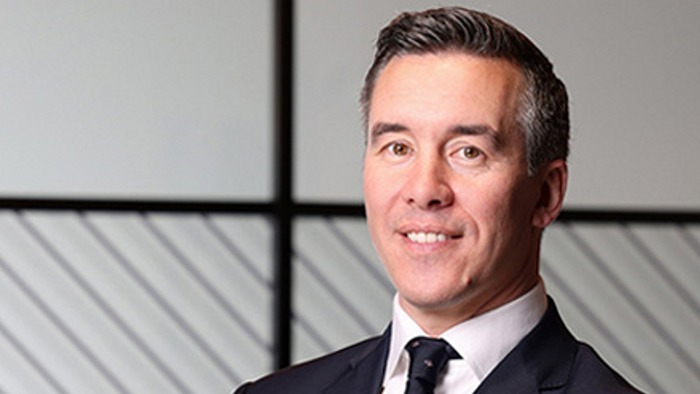
Deloitte Ireland has appointed Graham Healy as its regional leader for Cork, putting the partner who runs the firm's engineering practice in charge of an office it has spent three years enlarging. The firm announced the appointment on 20 October 2026 and framed it as part of a wider set of leadership changes that has included new partner hires and internal promotions across the business.
Healy is a partner in the technology and transformation practice and the firm's engineering lead, a role he keeps alongside the regional brief. He joined as a consulting partner in the spring of 2023 from Accenture, where he had most recently been a managing director, and he has spent more than twenty five years delivering technology enabled transformation for public and private sector clients in Ireland and across Europe, the Middle East and Africa. His background runs through data and digital transformation work, C-suite roles in several organisations, and growth-stage technology and financial technology businesses.
"We have an incredible business in Cork with remarkably strong foundations that began in the city 150 years ago," Healy said, adding that he was looking forward to working with colleagues there to build on that momentum with clients in the region.
Harry Goddard, chief executive of the Irish firm, said it was an exciting time to be focusing on regional teams. "Graham and the teams' work with clients on large-scale technology programmes that align with their strategic business or societal goals, are gaining significant traction," he said, describing the business as being at an inflection point and placing a heavy emphasis on outcomes that lift client performance.
Healy holds an MSc in management information systems and a BSc in business information systems from University College Cork. He sits on the university's business information systems advisory board and its sports leadership steering group, and represents it on the board of a national research centre for data analytics. He has also served on the board of a children's charity.
The appointment lands against a specific commitment. The firm said in the summer of 2023 that it intended to double its Cork headcount with 300 additional roles over three years, most of them attached to a new technology and analytics hub in the city, and it tied that target to the 150th anniversary of its presence there. Putting the engineering lead in the regional chair is a signal about which half of that hub matters most.
There is a competitive dimension too. Cork has become the second front in Irish professional services, with the large firms building delivery and advisory capacity outside Dublin to reach Munster clients and to recruit from a labour market that is cheaper and less contested than the capital. A regional leader who is also the national engineering lead gives the firm an unusual configuration, because the person responsible for the office is also the person who decides where technical delivery work is staffed.
The strategic read is that Cork is meant to be a substantive technology hub rather than a delivery annex. The firm's four capability lines are audit and assurance, tax and legal, advisory, and technology and transformation, and it is the last of these that has been absorbing client budgets as organisations move from experimenting with artificial intelligence to industrialising it. Whether the Cork office can convert that demand into partner-level relationships, rather than acting as a staffing pool for Dublin-led engagements, is the test the appointment sets. The answer will show up in the office's own client wins over the next two financial years, not in its headcount.