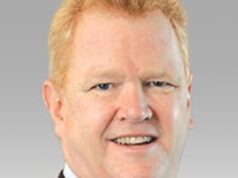


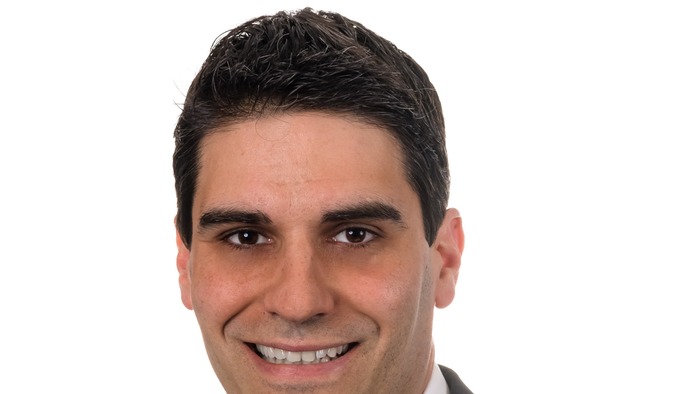
Curtiss-Wright has appointed Gary Ogilby interim chief financial officer, effective immediately and continuing until a permanent successor is named. The aerospace and defence group announced the change on 6 October 2026.
Ogilby is senior vice president and corporate controller and retains that role, together with his responsibilities as principal accounting officer, while holding the interim appointment. He joined Curtiss-Wright in 2010, became vice president and corporate controller in 2020 and was promoted to senior vice president this year. He is forty five, began his career in the audit practice of Ernst and Young, and holds an accountancy degree from The College of New Jersey.
He succeeds K. Christopher Farkas, executive vice president and chief financial officer, who stepped down from the finance role and will retire at the end of the calendar year. Farkas had been chief financial officer since 2020 and was promoted to executive vice president in January. The company stated that his decision is unrelated to its business or financial performance, and he remains an executive vice president through his retirement date to assist the handover. The board has started a search for a permanent chief financial officer.
The timing is what makes this one worth noting. Curtiss-Wright announced a separate leadership transition in late September, under which Lynn Bamford becomes executive chair and Kevin Rayment becomes president and chief executive at the start of next year. The company is therefore replacing its chief executive and its chief financial officer within a fortnight of each other, and will enter the new year with a new occupant in both seats.
Boards generally stagger such changes precisely to avoid that. Promoting the controller rather than appointing an external interim is the obvious mitigation, since it keeps the closing process, the segment reporting and the auditor relationship in the same hands they have been in for six years.
For a defence contractor with a multi year funded backlog, continuity in the finance function is less about forecasting revenue than about programme accounting, where estimates at completion drive reported margin. That is controller territory, which may be the strongest argument for the choice the board made.
Farkas remains an executive vice president through to his retirement, so the company retains access to him during the handover. That is the usual mitigation where a finance chief departs mid year, and it matters more than usual here because the incoming chief executive arrives at the same point.
Curtiss-Wright has grown through acquisition in recent years, adding businesses in nuclear, naval propulsion and industrial automation, and the purchase accounting attached to those deals runs through the controller's function rather than the chief financial officer's. Keeping both roles in the same hands removes a handover that would otherwise have happened at the worst possible moment.