


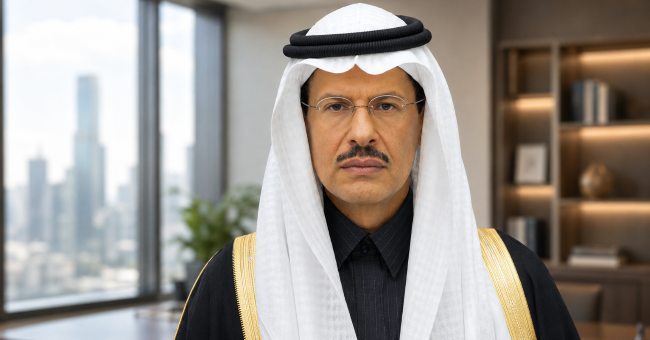
Prince Abdulaziz bin Salman, Saudi Arabia's Energy Minister since 2019, has been appointed chairman of the Local Content and Government Procurement Authority following royal decrees issued by King Salman bin Abdulaziz on August 13, 2026. The appointment comes as part of a broader cabinet reconstitution required under Saudi Arabia's four-year ministerial term limits. Prince Abdulaziz replaces Bandar Alkhorayef, who was relieved of his position. The authority exercises significant influence over Saudi Arabia's economic diversification strategy by managing government procurement and local supply chain development across the kingdom's public and private sectors.
The appointment occurred during a planned cabinet restructuring ordered by King Salman under Crown Prince Mohammed bin Salman's chairmanship, with all current ministers retained in their existing positions. According to the Saudi Press Agency, the reshuffle implements Article 9 of Saudi Arabia's Council of Ministers Law, which mandates cabinet reconstitution every four years. The royal decrees also included the appointment of Mazen Al-Sudairi as chairman of the Capital Market Authority, succeeding Mohammed bin Abdullah Al Kuwaiz. No search firms were mentioned as facilitating the appointment, which followed standard royal decree procedures for cabinet-level changes in the kingdom.
Prince Abdulaziz, born in 1960 and the fourth son of King Salman, has spent nearly four decades in Saudi Arabia's energy sector. He holds a bachelor's degree in industrial management and an MBA from King Fahd University of Petroleum and Minerals. His career progressed through positions including director of economic and industrial studies, advisor to the petroleum minister, assistant undersecretary, undersecretary, assistant minister, and deputy minister at the Ministry of Petroleum and Mineral Resources before ascending to his current energy portfolio. He was appointed Energy Minister in September 2019, becoming the first royal family member to lead the ministry since its establishment in 1960, and has been instrumental in negotiating OPEC+ agreements on production policy and served as a permanent member of Saudi Arabia's OPEC delegation.
The Local Content and Government Procurement Authority, established in December 2018, oversees implementation of local content policies across Saudi Arabia's government procurement and state-owned enterprises. The authority is responsible for developing local opportunities, setting and monitoring local content targets, designing procurement mechanisms, and collaborating with public and private sector stakeholders to advance local capacity building. In the second quarter of 2026, the authority oversaw government tenders worth 63 billion riyals ($16.8 billion) subject to local content mechanisms, with 8,600 tenders launched. The authority manages mandatory product lists, industrial localization agreements, and economic participation programs aligned with Saudi Vision 2030's objectives to reduce oil dependence and diversify the national economy.
Prince Abdulaziz's dual role as Energy Minister and now chairman of the Local Content and Government Procurement Authority consolidates oversight of two critical pillars of Saudi economic policy under a single leader with unparalleled institutional knowledge of the kingdom's energy sector and trade relationships. The appointment appears designed to strengthen alignment between energy policy and local content development, potentially signaling the Crown Prince's intent to accelerate Vision 2030 industrialization targets by placing a trusted veteran with deep OPEC experience in direct control of procurement and supply chain localization. However, it also concentrates significant economic authority in one individual and may create potential conflicts between energy sector priorities and broader local content mandates affecting non-energy industries dependent on government contracting.