HUMAIN, the artificial intelligence company owned by Saudi Arabia's Public Investment Fund, has signed two financing agreements worth up to 2.5 billion riyals, about 667 million dollars, with the National Infrastructure Fund, known as Infra, in facilities announced on 9 November 2026 and signed in Riyadh.
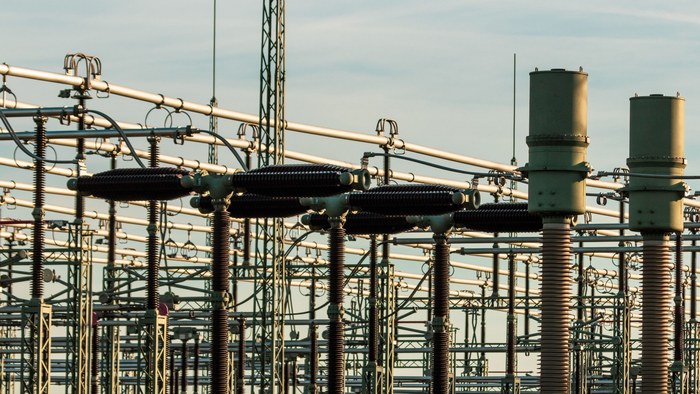
The first facility, of up to 1.1 billion riyals or 293.3 million dollars, will fund the procurement and deployment of graphics processing units representing about 25 megawatts of information technology load. The second, of up to 1.4 billion riyals or 373.3 million dollars, will fund substations, transmission infrastructure and grid connections for HUMAIN's data centres in the kingdom, with the power infrastructure sized to support future development of up to one gigawatt of information technology capacity. Infra is the sole lender named in both agreements.
The loans convert a little over half of a wider strategic financing framework of up to 4.5 billion riyals, or about 1.2 billion dollars, that the two parties announced at Davos earlier this year. That framework set non-binding terms covering up to 250 megawatts of HUMAIN hyperscale capacity, and these facilities are the first portion to become binding.
Yasir Al-Rumayyan, governor of the Public Investment Fund, attended the signing, as did Faisal bin Fadhil Alibrahim, minister of economy and planning and chairman of Infra's board, and Abdulaziz Alarifi, governor of the National Development Fund. Esmail bin Mohammed Alsallom, chief executive of Infra, said: "Through these agreements, we aim to unlock investment well beyond Infra's own commitment," adding that the fund's role is to strengthen project readiness and bankability. Tareq Amin, chief executive of HUMAIN, said the facilities "will help accelerate the deployment of advanced computing capacity and the power infrastructure required to support it."
The split between the facilities is the detail worth noting. Separating chips from substations acknowledges that these are different assets with different lives: graphics processing units depreciate on a cycle measured in a few years, while transmission infrastructure lasts decades. Financing them apart lets each be priced on its own terms, and the sizing shows where the constraint actually sits. The chip facility covers about 25 megawatts of load; the grid facility is built for up to a gigawatt. In other words, the money is going mostly into the ability to deliver power, not into the computers that consume it, a candid statement about what limits data centre construction in the Gulf.
For the sector this is a template rather than a one-off. Development finance institutions in the region are being asked to make artificial intelligence infrastructure bankable for commercial lenders who will not take early stage power and offtake risk, and Alsallom described exactly that intention. If it works, it lowers the cost of the next tranche and brings banks into a market they have watched from a distance. If the 250 megawatt framework converts in full, HUMAIN will have a funding channel independent of its shareholder's balance sheet.
For HUMAIN's competitive position the agreements matter less for their size, which is modest against global hyperscaler spending, than for their character. The company competes with Emirati vehicles for the same chips, the same engineering contractors and the same sovereign compute customers, and the advantage it is buying is grid readiness rather than capacity itself. For Amin, who must show deployed megawatts rather than announced ones, the challenge is now execution against a power build programme sized far ahead of his present chip order. For Alsallom the agreements are the proof point for a mandate that depends on crowding private capital in behind public money.