


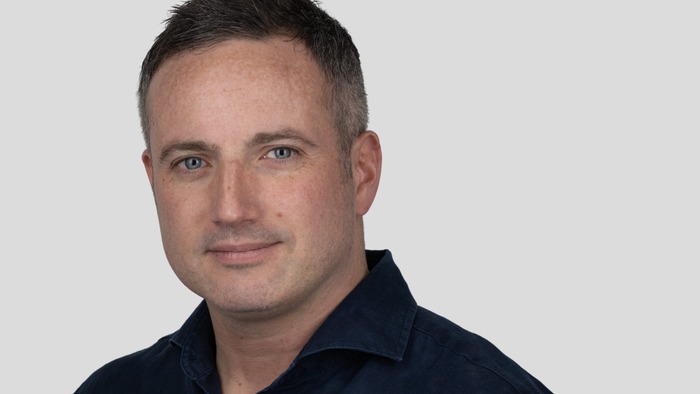
Venture Life Group plc has appointed Daniel Wells as Chief Executive Officer with effect from 1 January 2027, promoting the company's chief financial officer to the top job as its founder steps back.
The appointment was announced on 29 September 2026 alongside the company's final results, in a regulatory news service statement covering results and chief executive succession.
Jerry Randall, who founded the business and has led it as Chief Executive Officer, notified the board that he will retire from the role with effect from 31 December 2026. He will remain a director until 31 May 2027 and will then continue to advise the board and senior management, an arrangement that keeps institutional knowledge available without leaving the founder in operational control.
Wells has served as Chief Financial Officer for about five years, having joined the group in December 2021 through an acquisition. Before that he spent a decade at Mitie Group plc in senior finance and commercial roles. He qualified as a chartered accountant with the Institute of Chartered Accountants in England and Wales in 2011.
Venture Life Group develops, manufactures and sells self-care products, the consumer health category that sits between pharmaceuticals and ordinary consumer goods. Its portfolio spans oral care, women's health, gastrointestinal health and skin care, sold both under its own brands and through partners in a wide range of international markets. The business combines in-house manufacturing with brand ownership and third-party distribution, which makes it as much a supply chain company as a consumer brands company.
That structure explains why promoting the finance chief is a coherent choice rather than a default one. The levers that determine performance at a company of this size are gross margin by product line, factory utilisation, working capital tied up in inventory across multiple jurisdictions, and the terms of distribution agreements. All of them sit naturally within a chief financial officer's line of sight, and a finance chief who arrived through an acquisition has also seen how the group integrates what it buys.
Founder successions are where small-cap boards most often come unstuck, because the founder is frequently the company's main commercial relationship holder as well as its chief executive. The structure here is designed to manage that. A three-month overlap on the board after the handover, followed by an advisory role, gives the incoming chief executive cover for the first reporting cycle and a route to introductions without an ambiguous reporting line.
The market will judge the transition on whether the group's international partner relationships hold through 2027 and on the pace of margin improvement. Those are the two things a founder typically carries personally and a successor has to institutionalise.