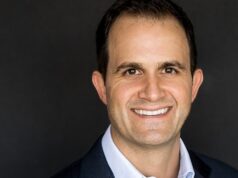


The UAE President, Sheikh Mohamed bin Zayed Al Nahyan, has issued a federal decree appointing Hamad Al Kaabi as Director-General of the Federal Authority for Nuclear Regulation (FANR), the country's independent nuclear regulator. The decree was issued on 7 June 2026, placing a senior diplomat and nuclear engineer at the head of the body that oversees the safety and regulation of the Emirates' civil nuclear programme.
Al Kaabi brings an unusual combination of technical and diplomatic experience. He holds bachelor's and master's degrees in nuclear engineering from Purdue University in the United States, and served for more than a decade as the UAE's Permanent Representative to the International Atomic Energy Agency from 2008, representing the country in international nuclear forums. He has also served as UAE Ambassador to Austria, Slovakia and Slovenia, roles that placed him at the centre of the UAE's engagement with the global nuclear governance community.
He succeeds Christer Viktorsson, a nuclear physicist who had led FANR since 2015 and brought more than 35 years of experience in nuclear regulation and safety. The transition maintains continuity at the top of an institution whose credibility is central to international confidence in the UAE's nuclear sector.
The appointment comes as the UAE consolidates its position as the Arab world's first country to operate a large-scale civil nuclear energy programme, with nuclear power now supplying a significant share of the country's electricity. A regulator's independence and technical authority are essential to sustaining both domestic and international trust in that programme, and Al Kaabi's background spans the scientific, regulatory and diplomatic dimensions the role demands.
For FANR, the change of leadership signals continuity of mission rather than a shift in direction. The regulator's priorities, from oversight of plant operations to international cooperation and readiness for any expansion of nuclear capacity, will continue under a director-general who has represented the UAE's nuclear interests on the world stage for close to two decades.
The choice of a leader who has spent years inside international nuclear diplomacy also reflects how closely the UAE ties its domestic programme to global norms and cooperation. Confidence from partners, suppliers and international bodies rests in large part on the regulator being seen as technically rigorous and institutionally independent, and a director-general with standing in those circles reinforces that positioning.
As the sector matures, the regulator faces the ongoing task of overseeing routine operations while preparing for questions about longer-term capacity, workforce development and the safe management of nuclear material. Al Kaabi's dual technical and diplomatic grounding equips him to address both the operational and the international dimensions of the role as the programme moves into its next phase.