


Microsoft said on 23 September 2026 that it will invest more than 10 billion dollars across the United Arab Emirates, Saudi Arabia, Qatar and Kuwait through 2030, funding cloud and artificial intelligence infrastructure in the region. The company said it will commit a further 400 million dollars to subsea and terrestrial connectivity over the same period.
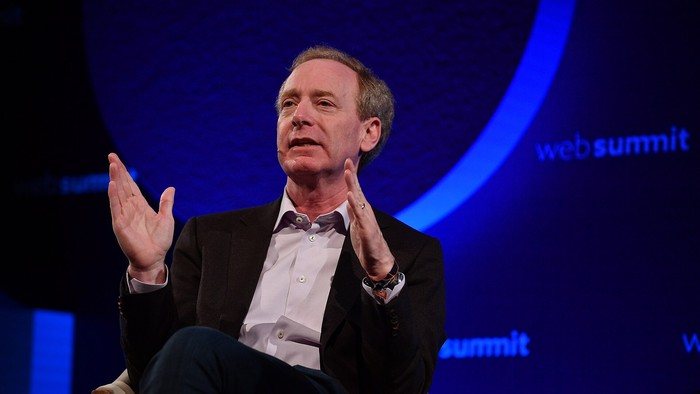
Brad Smith, the company's vice chair and president, framed the commitment as an acceleration rather than a continuation. He said Microsoft is sustaining all the investments it had planned before the current regional conflict began and is in fact adding to them, describing the programme as an aggressive spending schedule.
The company positioned the programme explicitly around digital resilience, covering data failover, redundancy and the protection of critical data. That framing follows reported attacks on regional data centre infrastructure, including facilities operated by other cloud providers in Bahrain and the United Arab Emirates.
Microsoft holds a 1.5 billion dollar minority stake in the Abu Dhabi artificial intelligence group G42, taken in 2024, and Smith sits on that company's board. In Saudi Arabia and Qatar the approach is different: Microsoft said it will work with Saudi Arabia's Humain and with Qatar's Qai in selected priority areas without taking equity positions.
Why a technology group is spending into a conflict
The instinctive reading of a war is that capital retreats. What this commitment suggests is the opposite for one specific category. Sovereign cloud demand in the Gulf appears to be rising because of the conflict rather than in spite of it, because governments and large enterprises that have watched infrastructure become a target now treat data residency, failover and redundancy as a first order requirement rather than a compliance checkbox.
That reframes the economics. Resilience is expensive to build and expensive to buy, and a provider that can credibly offer it across four jurisdictions has a commercial position that is hard to replicate quickly. The 400 million dollars earmarked for subsea and terrestrial connectivity is the part of the announcement that carries the most information: it is a commitment to the physical routes data travels on, which is precisely where a regional network is most fragile.
What it means for boards in the region
For any board operating in the Gulf, the announcement resets a baseline. Expectations on where data sits, how quickly it can fail over and what continuity costs are now being set by the largest provider in the market, and procurement functions will be asked to match them. Boards that have treated cloud architecture as a technology decision should expect it to arrive on the risk register instead.
The structure of Microsoft's regional relationships is also worth reading carefully. An equity stake in one national champion and non equity partnerships in two others is a deliberate asymmetry, and it says something about how each government intends its own artificial intelligence capability to be owned.