

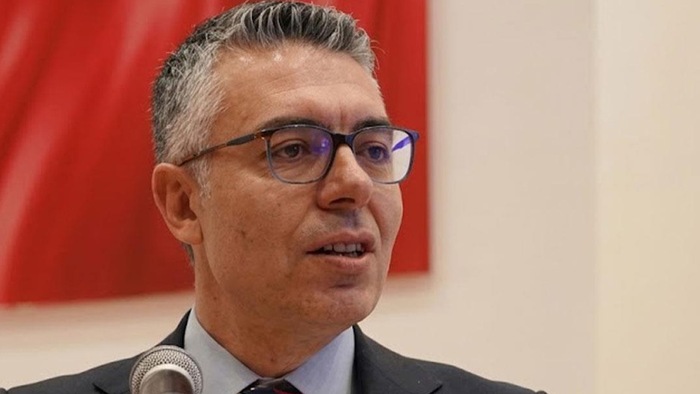
Türkiye has appointed Muhsin Atci as Chairman of the Capital Markets Board, under a presidential decision signed by Recep Tayyip Erdogan and published in the Official Gazette on 1 November 2026.
The same decision named Ersin Basar Ekmekci as deputy chairman and Yasemin Girici as a board member. The appointments were made under Article 119 of Capital Markets Law No. 6362 and under Articles 2, 3 and 7 of Presidential Decree No. 3. The decision text does not name a predecessor, does not explain why the post became vacant, and does not state a term length or a start date.
Mr Atci arrives from the Tax Inspection Board, where he had been chairman since the autumn of 2023. His career has been built entirely inside the Turkish revenue administration. He began as a tax auditor assistant in 2003, became a trainee revenue controller two years later and a revenue controller in 2008, and was made deputy head of the administrative and financial affairs department in 2010. He became a tax inspector in 2011 when the that board was established, led the Ankara large scale taxpayers group from the autumn of 2014, and served as deputy chairman of that board from the summer of 2017 until the spring of 2019.
He holds a bachelor's degree from Istanbul University, Faculty of Political Sciences, in public administration, and a master's degree in development policy from Duke University awarded in 2014. He is pursuing doctoral study in the finance department at Ankara Haci Bayram Veli University.
The regulator he now leads supervises the Turkish capital markets, including listed issuers, intermediaries, collective investment schemes and market infrastructure. Its chairmanship is a ministerial rank appointment and the board has four further members alongside the chairman and deputy chairman.
Appointing a career tax administrator rather than a markets practitioner is a choice with a readable logic. The that board is the Turkish state's principal corporate audit function, and running it means spending years inside the accounts of large taxpayers, including listed companies. That is adjacent to securities supervision in a way that is easy to miss from outside: both jobs turn on whether a company's reported numbers describe what actually happened.
The appointment also comes with three new faces at once, a chairman, a deputy and a member named in a single decision. A board refreshed that comprehensively usually signals an intended change of posture rather than a routine succession, though the decision itself says nothing about what that posture should be.
What the record does not tell us is where the new chairman stands on the questions the market actually cares about: the pace of new listings, enforcement against manipulation, the treatment of foreign investors and the regulator's appetite for intervening in trading. He has given no public statement since the appointment, and the decision carries no policy framing. Turkish issuers and intermediaries will take their first reading from the regulator's early enforcement decisions rather than from anything said at the outset.