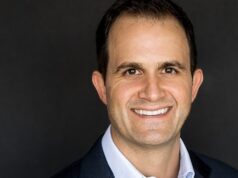
Tenable Holdings has appointed Charlie Bell to its board of directors, announcing the move on 2026-10-06. Bell is one of the small number of executives who has run security at hyperscale on both sides of the industry, and his arrival gives the exposure management company a director whose operating experience maps directly onto its own market.
Bell spent the final stretch of his executive career as Executive Vice President of Security, Compliance, Identity and Management at Microsoft, a division created in part to answer sustained criticism of the company's security posture. Before that he spent close to twenty five years at Amazon, most of it building Amazon Web Services, where he ended as a Senior Vice President and was among the earliest engineering leaders of the cloud business. Earlier still he spent roughly seven years at Oracle running professional services, and he began his career at Boeing working on Space Shuttle missions, including the deployment of the Hubble Space Telescope.
That span is the point. Tenable sells to the people who have to defend large estates they do not entirely control, and the hardest problems in exposure management are problems of scale and of identity rather than of detection. A director who has carried responsibility for securing both the largest public cloud and one of the largest software companies has seen the customer side of Tenable's proposition from the inside, and has also seen what buyers actually do with the tooling once they have it.
Bell also sits on the board of Twilio, the communications platform company, so he arrives with current listed company governance experience rather than only an operating record. For a company in Tenable's position, which competes against both specialist rivals and the security businesses of the cloud providers themselves, a director who understands how those cloud security organisations are run and funded is a specific and unusual asset.
The timing is also worth noting. Bell left the Microsoft security role earlier this year, which places him in the window when a senior operator's knowledge is still current but his calendar is free enough to take board work seriously. Boards competing for that profile are competing against a short list, because the number of people who have run security at this scale is measured in dozens rather than hundreds, and most of them are still in executive seats.
What the appointment does not do is signal a change of strategy. Tenable has been consistent in positioning itself around exposure management rather than vulnerability scanning alone, and Bell's background reinforces that direction rather than redirecting it. The more interesting question for shareholders is whether a board weighted towards practitioners will push harder on the pace of product consolidation, which is where the company's competitive pressure is most acute.
The appointment continues a pattern across the security sector of boards recruiting practitioners rather than generalists. Security buying decisions increasingly sit with chief information security officers who are themselves operators, and boards that can interrogate a product roadmap on technical grounds are better placed to judge whether a company is keeping pace. Tenable did not disclose any committee assignments at the time of the announcement.