

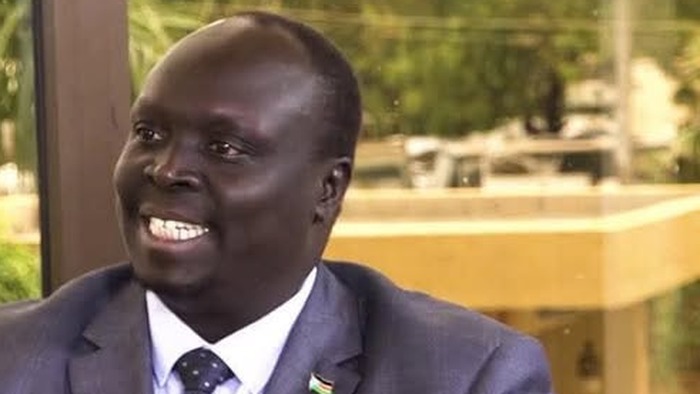
South Sudan has appointed Awow Daniel Chuang as Caretaker Minister of Petroleum, returning a long-serving technocrat to the ministry that manages the country's single largest source of public revenue. The appointment was made by presidential decree on 22 September 2026.
The decree formed part of a wholesale reconstitution of the government by President Salva Kiir Mayardit, who dissolved the transitional administration and named a caretaker cabinet ahead of elections scheduled for December. First Vice President Riek Machar and four other vice presidents were removed, and all substantive and deputy ministers were relieved of their posts in the same decree. The petroleum portfolio had last been held substantively by Puot Kang Chol, who had been suspended since early 2025.
The Ministry of Petroleum of South Sudan confirmed the appointment the following day. Undersecretary Santino Ayuel Longar welcomed the incoming minister and said the appointment reflected the experience he had accumulated across a succession of senior roles, including service as Director General, Minister and Technical Advisor within the ministry.
A return to a portfolio he has held before
Chuang is not new to the role. He served as Minister of Petroleum from June 2019 until March 2020, when he was reassigned as undersecretary of the ministry, a post he held until July 2022. He subsequently worked as a technical advisor to the ministry.
In March 2024 he moved across government to lead the Ministry of Finance and Economic Planning of South Sudan, taking the oath of office on 18 March. That tenure was brief, ending with his dismissal on 10 July 2024 amid an economic crisis driven by disrupted crude exports. He returned to the petroleum ministry as a technical consultant, and in July 2026 represented South Sudan at an OPEC Plus technical meeting in Baku.
He is an engineer by training and is referred to in ministry communications as Eng. Awow Daniel Chuang. His name is also rendered as Awou Daniel Chiang in some official cabinet listings.
An oil ministry under pressure
The appointment lands at a difficult moment for South Sudan's hydrocarbons sector. Crude oil accounts for the overwhelming majority of government revenue, and exports depend on a pipeline that runs north through Sudan to Port Sudan, leaving Juba exposed to conflict and infrastructure failures beyond its own borders. Production has repeatedly been interrupted, and the fiscal consequences have been severe enough to reshape cabinets.
The caretaker designation matters as much as the portfolio. A caretaker minister is appointed to hold a brief through an electoral period rather than to set a new long-term direction, which in practice places a premium on continuity, on keeping existing operators and partners engaged, and on maintaining the technical relationships that govern production. Chuang's history inside the ministry, including his period at Nile Petroleum Corporation level engagement with operating partners, is the clearest signal of what the government is prioritising: an administrator who already knows the files.
Whether the caretaker arrangement survives the December elections will determine how much latitude he has. For now, the ministry has a minister who has run it before.