


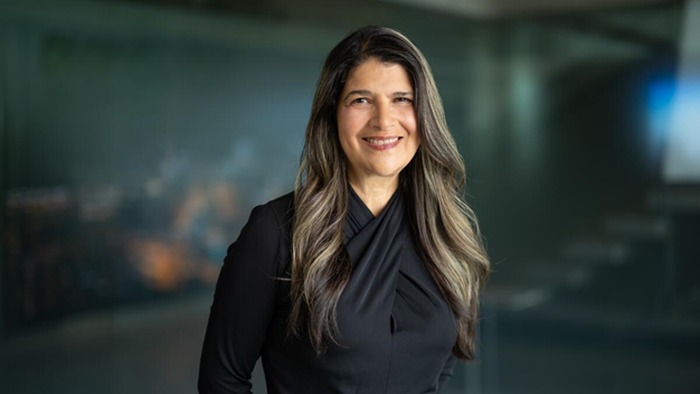
Premier Health has named Rosanna Morris as its next president and chief executive officer, recruiting the operations chief of one of the largest cancer centres in the United States to lead the Dayton health system. The Board of Trustees announced the appointment on 22 October, and she takes up the role in the first quarter of 2027.
Morris joins from The University of Texas MD Anderson Cancer Center, where she has been executive vice president and chief clinical operating officer, overseeing a clinical enterprise of roughly six billion dollars. She arrived at MD Anderson as chief operating officer in 2019 from Beaumont Health in Michigan, where she had been president of Beaumont Hospital, Royal Oak. Earlier in her career she held executive and chief nursing officer roles at Nebraska Medicine.
She succeeds Michael Riordan, who is retiring after five years leading the system. Premier Health credits Morris with more than 27 years of leadership experience across academic and community settings.
The hire follows a pattern visible across mid-sized United States systems: boards reaching into large academic centres for operators who have run complex clinical enterprises at scale, rather than promoting from within or recruiting from systems of similar size. Morris is also a registered nurse by training, part of a steady shift towards clinically credentialed chief executives in provider organisations where physician and nurse retention has become a board-level concern.
Premier Health describes itself as a private, nonprofit academic health system serving southwest Ohio, affiliated with Wright State University and its Boonshoft School of Medicine. That academic affiliation is likely to matter in the fit: Morris spent the past several years inside an academic cancer centre, and the Dayton system's teaching relationship gives her a familiar structure to work with.
The gap between announcement and start date gives the board a long runway for transition. Riordan remains in post through the handover, and Morris will inherit a system navigating the same cost and workforce pressures as its peers across the American Midwest.
The incoming chief executive arrives with an operating background rather than a purely strategic one, which is the profile boards have favoured where the central problem is throughput and cost per case rather than market positioning. Running a clinical enterprise of that scale involves daily responsibility for capacity, staffing and patient flow, and those are the levers a mid-sized system has available when reimbursement is largely fixed.
Ohio's provider market has consolidated steadily over the past decade, leaving fewer independent systems and sharper competition for specialist referrals. A system anchored in Dayton sits between larger academic centres in Columbus and Cincinnati, which makes the retention of complex cases locally a recurring strategic question and one that a new chief executive is usually asked to address early.
A board announcing a successor more than two months before the start date, with the outgoing chief executive remaining in post, is signalling an orderly transition rather than a correction. That matters to clinical leadership and to lenders, both of which read chief executive turnover at nonprofit systems as a risk indicator.