


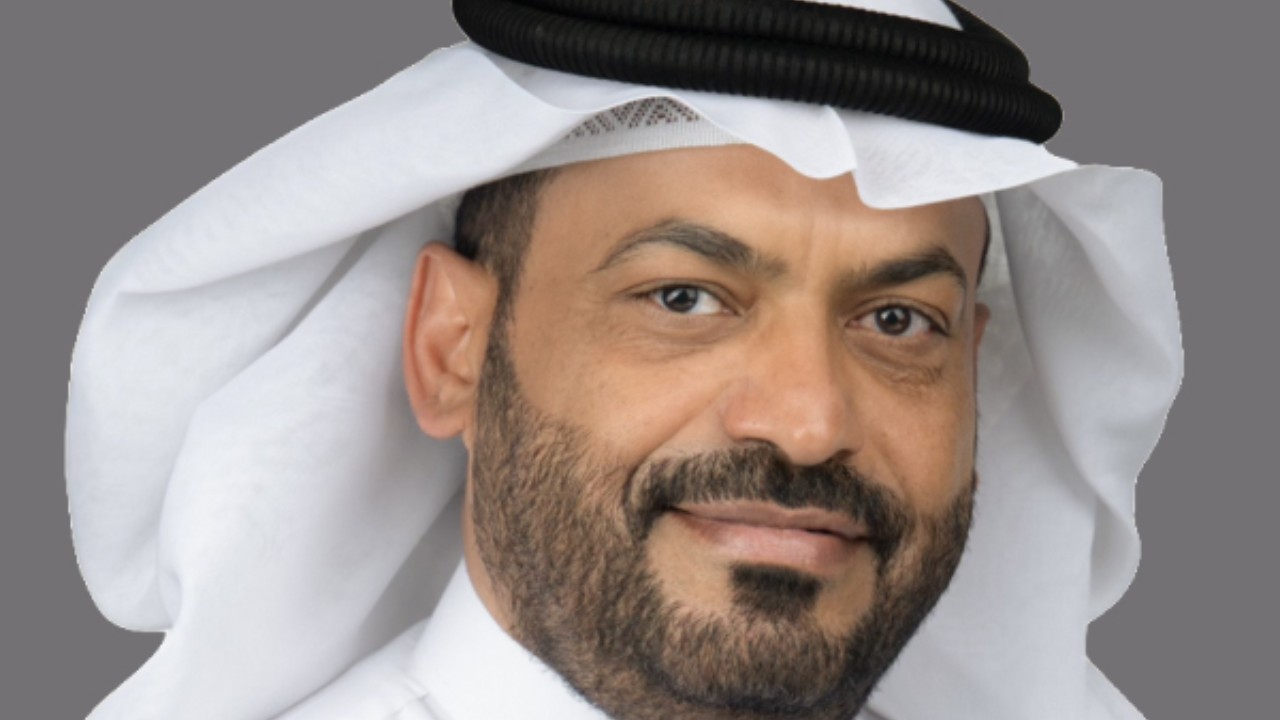
Rabigh Refining and Petrochemical Company has appointed Hassan Al-Yami as President and Chief Executive Officer, promoting a long-serving refining engineer to the top of one of the largest integrated refining and petrochemical complexes in Saudi Arabia. The company disclosed the appointment to the Saudi Exchange on 24 August 2026, following a board resolution the previous day.
The appointment took effect on 1 September 2026.
Al-Yami brings more than three decades of leadership experience across refining and petrochemicals, spanning operations, engineering, major industrial projects, business transformation and business development in Saudi Arabia and internationally. He began his career with Saudi Aramco in 1995 at the Ras Tanura refinery, holding operational, engineering, maintenance and leadership assignments.
He has an unusually deep history inside the business he now leads. Earlier postings at the Rabigh complex covered utilities operations, terminal and marine operations and petrochemical manufacturing, before he rose to general manager of operations, managing director of a major capital project, and vice president of engineering and support. He has also held senior leadership positions at refining joint ventures in Malaysia and in the eastern province of Saudi Arabia. He joined from Saudi Aramco, where he most recently served as vice president for the Ras Tanura refinery.
He holds a Bachelor of Science in mechanical engineering from the University of Tulsa, awarded in 1995, and has completed executive leadership studies at the Stanford University Graduate School of Business.
The transition follows the departure of Othman Al-Ghamdi, who stepped down as President and Chief Executive Officer for personal reasons with effect from 31 August 2026. His resignation was accepted by the board on 23 August, and he remains a member of the board of directors, giving the incoming chief executive continuity of institutional knowledge at board level rather than a clean break.
The handover lands at a favourable moment in the cycle. The company reported a net profit of 2.66 billion riyals for the second quarter of 2026, against a loss of 1.37 billion riyals in the same period a year earlier, and 4.13 billion riyals for the first half. That swing gives the new chief executive a stronger balance sheet position than his predecessor inherited, and more room to fund the bottom of the barrel upgrade project that remains in its engineering phase.
The choice of an internal engineering leader rather than a commercial or financial outsider is telling. A complex of this scale competes on reliability, throughput and conversion economics rather than on market positioning, and the board has selected someone who has run the utilities, the terminal, the petrochemical units and the engineering function of this specific asset. That reduces the learning curve on a site where unplanned downtime is the dominant swing factor in annual earnings, and it suggests the priority for the next phase is operational execution and project delivery rather than strategic repositioning.