

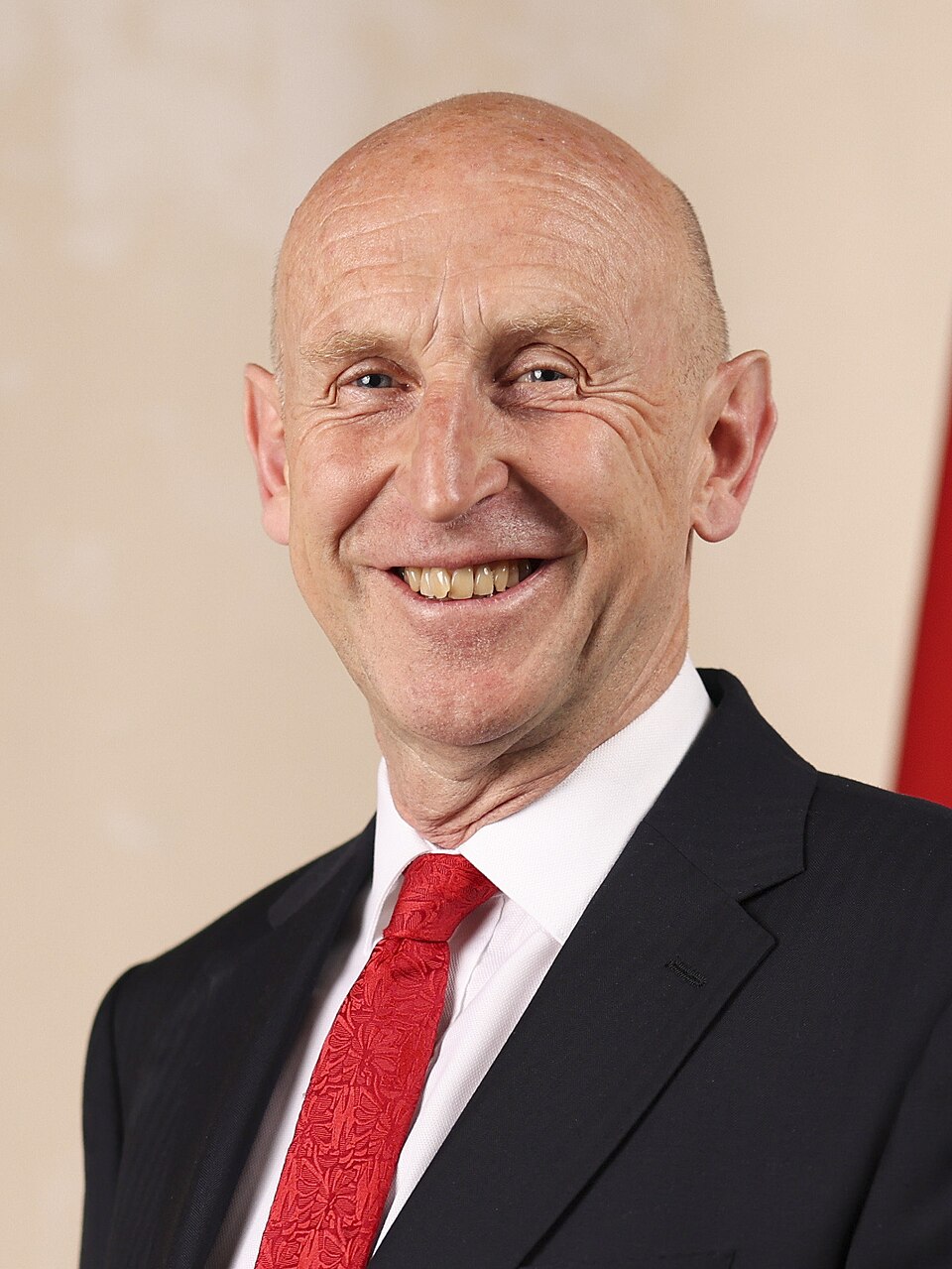
John Healey has been appointed Chancellor of the Exchequer by Prime Minister Andy Burnham, replacing Rachel Reeves in Britain's second-most important fiscal post. The appointment, announced on July 20, 2026, marks a significant shift in economic stewardship just hours after Burnham took office following Keir Starmer's resignation. The 66-year-old former Defence Secretary replaces Reeves, who held the Treasury portfolio since Labour's 2024 election landslide and was Britain's first female Chancellor.
Healey's move to the Treasury caught Westminster off guard. Speculation had centered on other candidates including Shabana Mahmood, Ed Miliband and Wes Streeting, with Healey barely mentioned in pre-announcement commentary. In a Bloomberg survey of market participants, he ranked as the second most investor-friendly option for Chancellor, trailing only Streeting. Burnham's decision signals an attempt to project economic competence and reassurance to bond markets concerned about the new Prime Minister's left-leaning track record. Stephen Phipson, chief executive of Make UK, welcomed Healey's appointment, citing his reputation as pragmatic and delivery-focused. However, analysts noted uncertainty about his economic views; he has little known position on fiscal matters beyond general assessment as a safe pair of hands who championed military spending. The appointment ends weeks of Treasury speculation and represents one of the largest reshuffles of Starmer-era ministers, with Burnham removing numerous Starmer loyalists including Darren Jones and David Lammy.
Healey has held extensive government and shadow positions across housing, health and defence portfolios over nearly three decades in Parliament. Born in Wakefield in 1960 and educated at Lady Lumley's Comprehensive School, Pickering, and Christ's College, Cambridge, he has represented South Yorkshire constituencies continuously since winning the Wentworth seat in 1997. He served as Parliamentary Private Secretary to the Chancellor before holding junior ministerial roles under Tony Blair and Gordon Brown from 2001 to 2010, including posts as Adult Skills Minister, Treasury Minister, Local Government Minister and Housing and Planning Minister. After Conservative victory in 2010, Healey spent 14 years in shadow cabinet roles under Ed Miliband, Jeremy Corbyn and Keir Starmer, serving as Shadow Housing Secretary from 2015 to 2020 and Shadow Defence Secretary from 2020 until his appointment as Defence Secretary in July 2024. Before entering Parliament, Healey worked as Campaigns Director for the Trades Union Congress from 1994 to 1997, following roles in disability rights campaigning and communications.
Burnham became Britain's seventh Prime Minister in a decade on July 20, 2026, following Starmer's resignation triggered by perceived aloofness, policy U-turns and poor performance in May local elections. The Manchester mayor defeated a sluggish economy, controversial decisions and party pressure to step aside. Burnham's administration inherited a weakened fiscal position and bond market anxiety. His first cabinet actions included appointing former Health Secretary Wes Streeting as Defence Secretary and promoting Ed Miliband to Foreign Office. The new government announced an immediate cut to energy tax on household electricity bills, funded by scrapping Starmer's Digital ID program. Burnham has pledged to stabilize politics, pursue reindustrialization and restore international confidence in British economic management, framing his premiership as a reset for a country experiencing sustained political turbulence.
Healey's appointment carries significant implications that extend beyond typical Treasury succession. Speculation emerged that his move to Chancellor could presage higher defence spending, given his consistent advocacy for military investment during his tenure at Defence. The appointment satisfies market demands for fiscal continuity while potentially signaling budget discipline will constrain competing departmental priorities. However, uncertainty persists about how a Chancellor primarily known for housing and defence expertise will navigate complex tax and spending challenges, including addressing Britain's stagnant growth, high borrowing costs and public service demands. His resignation as Defence Secretary just one month prior, over disputes regarding military investment adequacy, indicates he may retain priorities beyond pure fiscal orthodoxy. Whether Healey can combine the market reassurance he is perceived to offer with Burnham's more interventionist economic philosophy remains an open question for financial institutions and government bond holders.