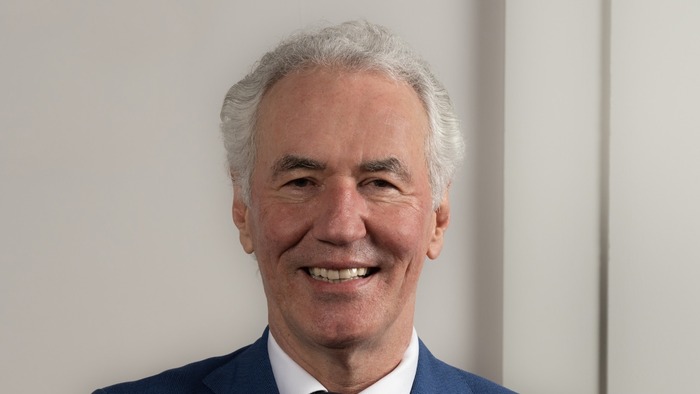
dsm-firmenich has confirmed a change at the top of its board. Shareholders in the nutrition, health and beauty group elected Richard Ridinger as chairman of the board of directors at an extraordinary general meeting, and the company published the outcome on 19 October 2026 in an ad hoc announcement issued under Swiss listing rules. Ridinger has served on the board as an independent director since 2023, and shareholders also elected him to the group's compensation committee.
The vote completes a succession the board set in motion earlier in the year. Directors nominated Ridinger unanimously in August, after Thomas Leysen told them he intended to retire from the chair once a successor had been elected. Leysen has now stepped down from the board. In thanking him, directors credited him with shaping the strategic direction of the combined group and with laying the foundations for its next phase of growth. Filling the chair from among the sitting independent directors keeps that work with someone who has watched it from inside the boardroom rather than handing it to an outsider still learning the business.
Ridinger is best known in European industry for his time running Lonza, the Swiss life sciences manufacturer, where he was chief executive from 2012 until 2019. Before that he held senior roles at Cognis, the specialty chemicals business, and at Henkel. His executive and board career has spanned pharmaceuticals, home and personal care, and nutrition and health, three fields that map closely onto the ends of the group's own portfolio.
The company itself is the product of a cross-border merger completed in 2023, and it operates from twin bases in Kaiseraugst in Switzerland and Maastricht in the Netherlands. It supplies flavours, fragrances, nutritional ingredients and health solutions to food, beverage, personal care, pharmaceutical and animal nutrition customers, and its shares trade in Amsterdam. The group is still working through the integration of two very different industrial cultures, one built on bulk nutritional science and the other on the craft economics of perfumery.
Read against that backdrop, the election is a vote for continuity. Elevating a sitting independent director rather than recruiting an outside chair signals that the board does not think the strategy needs re-litigating, only executing. It also keeps the chair close to the Swiss half of the group at a point when investors are still waiting for the merger to translate into the cost and revenue benefits that were promised when it was struck.
The second signal is sector fit. A chairman whose executive career ran through contract manufacturing for the pharmaceutical industry arrives with a particular instinct for capital allocation in science-led, capital-hungry supply chains, and with experience of the margin discipline that business demands. That is a useful counterweight on a board whose other half of the portfolio competes on creativity and customer intimacy rather than on throughput.
What the election does not settle is how the group will balance those two halves over the medium term, or whether the chair will press for sharper portfolio choices. Boards that promote from within tend to move slowly on structure, and Ridinger inherits a company that has already signalled it is prepared to prune. The compensation committee seat gives him an early lever, because pay design is usually the clearest public statement a board makes about which numbers it actually intends to be judged on.