

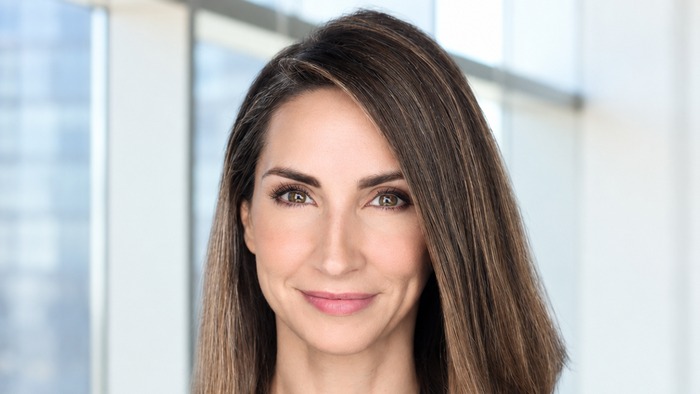
DEFCON AI has named Margo de Naray as Chief Executive Officer, promoting an aerospace and industrial operator into the top job at a defence software company whose contracted backlog has passed 150 million dollars. The appointment was announced on 29 September 2026.
Founded in 2022 and built inside Red Cell Partners, DEFCON AI develops modelling, simulation and analysis software for the resilient optimisation of complex logistics and operational systems, sold principally into the United States national security community. The company is headquartered in McLean, Virginia, and also works as an artificial intelligence systems integrator.
De Naray succeeds Yisroel Brumer, who remains with the company as Co-Founder in an orderly handover. Grant Verstandig, Co-Founder and Executive Chairman of DEFCON AI and Chief Executive Officer of Red Cell Partners, credited the outgoing chief executive with taking the business from research to procurement. "Under Yisroel's leadership, DEFCON AI has grown from an early-stage technology startup to a respected provider of decision and optimization capabilities to the national security community," he said.
De Naray brings more than 20 years of executive experience across aerospace, technology and global industrial businesses. She was President and Chief Executive Officer of Solestial, the space solar technology company, which she led through commercialisation and its acquisition by York Space Systems. Before that she was Senior Vice President and General Manager for space products and services at Astra. She spent more than a decade at Cargill, latterly as a Managing Director, in management roles across several continents, and began her career at Intel in manufacturing engineering. She holds an MBA and an MS in Engineering Systems from the Massachusetts Institute of Technology, and a BS in Industrial and Operations Engineering from the University of Michigan.
Verstandig said the board had hired for the next phase rather than for the current one. "We are thrilled to welcome Margo to the DEFCON AI team," he said. "Not only does she understand and believe in our mission, as someone experienced in scaling technology companies and guiding complex businesses through commercialization, she has the proven track record to lead DEFCON AI through our next phase of growth."
De Naray pointed to the order book as the reason the job is a scaling problem. "With a substantial backlog and pipeline, differentiated technology, and an extraordinarily talented team, DEFCON AI has an exceptional foundation for growth," she said. Brumer welcomed the appointment, saying: "Margo is an amazing talent who brings the exact experience we need to help DEFCON AI rapidly scale and capture the opportunities ahead."
The hire is a recognisable move in defence technology. A company that has won its way onto programmes of record typically needs a different chief executive from the one who won the first contracts, because the binding constraint shifts from credibility to delivery capacity. De Naray's Solestial and Astra experience is in hardware rather than software, but both were businesses that had to industrialise against government timetables.
The company's advisory bench reflects the customer base it is selling into, including General Thomas Bussiere of the United States Air Force, retired, as Strategic Advisor, and Lieutenant General Matthew Glavy of the United States Marine Corps, retired, as Vice President of Marine Corps Programs.