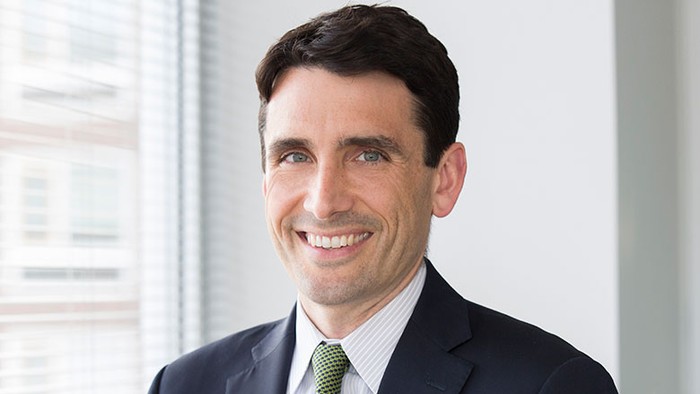
Beth Israel Lahey Health has appointed Peter Shorett as president and chief executive officer, promoting the system's chief operating officer to its top job. The Board of Trustees announced the appointment on 8 October, and Shorett takes up the role in January.
Shorett joined Beth Israel Lahey Health in 2019 and has held several senior posts there, most recently serving as senior executive vice president and chief operating officer. In that role he oversaw system performance, growth and strategy, and he helped create the cancer collaboration between Beth Israel Deaconess Medical Center, Dana-Farber Cancer Institute and Harvard Medical Faculty Physicians, one of the more consequential structural moves in Boston academic medicine in recent years.
He was named chief strategy officer for the system in 2021 before moving into the chief operating officer seat. Before joining the system he was a senior partner at Chartis, the healthcare advisory firm, where he worked on the design of Beth Israel Lahey Health itself. He holds a bachelor's degree from the University of California, Berkeley and a master's in public policy from Harvard Kennedy School.
The appointment is an internal elevation at a system of significant scale. Beth Israel Lahey Health describes itself as an academic health system made up of academic medical centers, teaching and community hospitals and specialty institutions, serving more than 2.1 million patients across eastern Massachusetts and southern New Hampshire. It is the region's second largest employer, with 39,000 employees and 5,300 physicians.
Promoting the chief operating officer rather than recruiting externally signals continuity at a moment when large United States academic systems are managing cost pressure, payer mix shifts and consolidation among their peers. Shorett's record at the system has been weighted towards integration and strategy rather than clinical operations alone, which is the profile boards have tended to favour where the central task is making a merged system behave as one organisation.
His background at Chartis, where he worked on the blueprint for the system he will now lead, gives him an unusually long view of how its component institutions were assembled and where the joins remain.
The timing of the handover gives the board a clear runway. The incoming chief executive has been part of the senior team through the period in which the system consolidated its clinical service lines, and the transition therefore carries none of the discovery cost that an external hire would bring. Boards in large academic systems have increasingly treated that continuity as the decisive factor, particularly where the organisation is still absorbing an earlier merger.
The wider context is a United States provider market under sustained margin pressure. Labour costs have not returned to pre-pandemic trend, payer mix has shifted towards government programmes with lower reimbursement, and capital spending on clinical technology continues to rise. Systems of this size have responded by concentrating specialist services on fewer sites and by deepening academic partnerships that spread research and trial costs across more than one institution.
Massachusetts is a particularly competitive market, with several large academic systems drawing on an overlapping physician and nursing pool. That makes workforce retention as much a strategic question as a human resources one, and it is an area where an operator with a system performance background is likely to be measured early.