

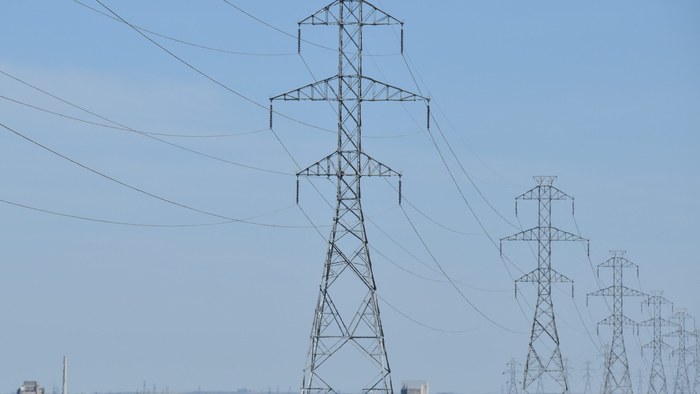
The United States Department of Energy has offered a conditional loan commitment of up to 2.8 billion dollars towards the Wyoming Intertie, a transmission project intended to link the eastern and western halves of the American grid. The announcement was made on 17 November 2026 by the department's Office of Energy Dominance Financing.
The line would add approximately 1.8 gigawatts of electricity transfer capacity, which the department says would double the existing capacity between the Southwest Power Pool and the Western Electricity Coordinating Council regions. The department puts the resulting saving at up to 39 billion dollars in electricity costs for households and businesses across 17 states over the 30 year life of the project, and says construction would support hundreds of jobs. It has not published a figure for the length of the line, its voltage, its total cost, the interest rate or the loan term, and none of those should be inferred from the announcement.
The developer is Grid United, which is named in the department's statement only by its trading name. No partner, co-developer, contractor or anchor customer is identified.
The instrument matters more than the headline suggests. The department's own title describes the money as a loan, while the body of the statement calls it a conditional loan commitment and says plainly that the developer must satisfy technical, legal, environmental and financial conditions before the department enters definitive financing documents and funds anything. A conditional commitment is a statement of intent with a list of conditions attached, not a drawn facility, and projects at this stage have been known to take years to reach financial close or to fall away entirely. Readers tracking the transmission build-out should treat the figure as an upper bound on a contingent exposure rather than as capital committed.
The strategic logic is the more durable part of the story. The American grid is effectively two large synchronous systems with very little capacity to move power between them, which means surplus wind in one region cannot relieve scarcity in the other during a heatwave or a deep freeze. Interregional ties are the cheapest known answer to that problem and the hardest to finance, because the benefits accrue across many states and many utilities while the cost and the permitting risk sit with one developer. Federal credit support exists precisely to bridge that gap, and the savings figure the department has published is an estimate of the benefit it is trying to unlock rather than a contracted return.
The project should not be confused with the same developer's North Plains Connector, a separate interregional line that reached a federal environmental milestone earlier in the year.