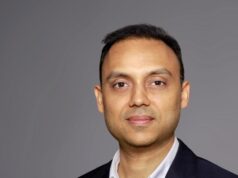
MMG Group has appointed Smeer Chopra as its group chief financial officer, handing the finance leadership of one of India's older diversified conglomerates to an executive whose career has run through consumer technology, organised retail and fast-moving consumer goods.
The appointment was announced on 28 October 2026. Chopra joins from the wearables brand Noise, where he was chief financial officer, and before that held the same role at the eyewear retailer Lenskart. His earlier career covers senior finance and leadership positions spanning telecommunications, organised retail and beverages. The group puts his total experience at more than 32 years across finance leadership, business strategy, capital management and operational excellence, with sector exposure running from fast-moving consumer goods and retail to e-commerce, telecommunications and consumer technology.
In the new role he will lead the finance function across the group's operating businesses. The brief, as the company describes it, is twofold: to drive sustainable profitability in each business in its own right, and to prepare the organisation for its next phase of growth through the capital markets and acquisition-led expansion. That is a materially different mandate from the one a conglomerate finance chief of an earlier generation would have carried, and it points to a group readying itself for external capital rather than simply managing a portfolio of privately held cash flows.
The group, also known as the MM Agrawal Group, was founded in 1964 and now spans food and beverage, quick-service restaurants, oil and gas services, hospitality, real estate and education. It ranks among the largest soft-drinks bottling partners in India, a business that sits at the centre of its food and beverage interests and one that is capital intensive by nature, requiring sustained investment in plant, distribution and working capital.
Welcoming the appointment, chairman Sanjeev Agrawal pointed to the breadth of the incoming finance chief's experience across industries and to his understanding of how the finance function supports business transformation.
The hire fits a pattern now visible across India's family-controlled conglomerates, which have increasingly recruited finance chiefs out of venture-backed consumer companies rather than promoting from within or drawing from the traditional audit and banking pipeline. Executives from that background arrive having lived with investor scrutiny, unit-economics discipline and the reporting rigour that institutional shareholders expect, all of which matter to a privately held group contemplating public capital for the first time.
For a group of this breadth the practical challenge is less about any single business than about comparability across all of them. Oil and gas services, education and quick-service restaurants carry different working-capital cycles, different margin structures and different capital requirements, and a group finance function has to produce a view that allows capital to be allocated between them on consistent terms. Experience in businesses where capital was raised against a clearly articulated operating model is the relevant qualification, and it is the one the group has chosen to buy.
No predecessor was named in the announcement, and the group did not state when the new finance chief formally takes up the role.