


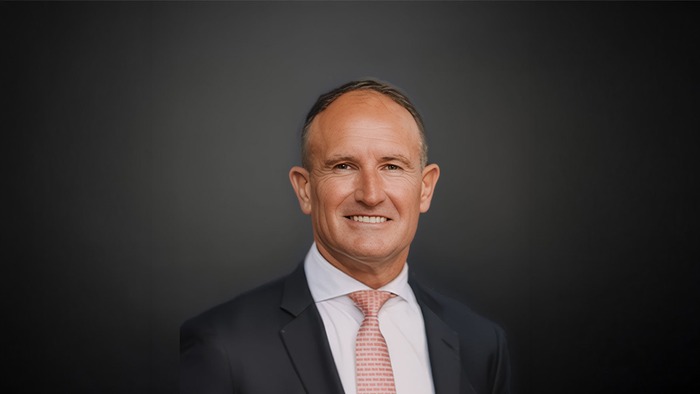
Ord Minnett has appointed Antony Shaw as chief executive, bringing in a former head of HSBC Australia to run one of the country's oldest wealth management and stockbroking houses. The firm confirmed the appointment at the start of October.
Shaw joins the privately held group this month and will formally assume the chief executive role early in the new year, under a handover designed to give him a full quarter alongside the incumbent leadership before he takes operational control. Karl Morris, who has led the business for more than a decade, moves to the role of executive chairman and remains closely involved in strategy and client relationships. The staged transition is a deliberate choice by the board rather than an abrupt change at the top.
He arrives with a background built almost entirely in large international banking rather than in domestic private wealth. Shaw spent several years as chief executive of HSBC Australia, where he ran a full-service operation spanning retail banking, commercial banking and institutional coverage, and where he was accountable to both a local board and a global head office. That combination of regulated scale and matrix reporting is unusual in the Australian advice market, and it is the clearest signal of what Ord Minnett's board has been looking for.
Why a banker, and why now
Ord Minnett occupies an awkward and potentially valuable position in the Australian market. It is large enough to compete for high net worth clients against the private banking arms of the major lenders, but small enough to remain genuinely independent of them. Sustaining that position has become more demanding as compliance expectations have risen, as platform technology has become a cost of entry rather than a differentiator, and as competitors have consolidated.
Appointing a banker rather than a broker suggests the board sees the firm's next phase as an institutional build rather than a continuation of the partnership model that carried it to this point. Risk frameworks, capital discipline and the governance apparatus that a bank chief executive handles routinely are precisely the areas where mid-sized advice firms have struggled under regulatory scrutiny in recent years.
The handover question
The arrangement leaves Morris as executive chairman rather than departing outright, which is a structure that can work well or badly depending on how clearly the two roles are separated. In firms where client relationships sit with a long-serving founder figure, a continuing executive chairmanship preserves continuity that would otherwise walk out of the door. The risk is ambiguity about who decides what, particularly in the early period when a new chief executive is still forming a view of the business.
Ord Minnett has not disclosed the length of the executive chairman arrangement. For clients and for the firm's advisers, the practical questions are whether the investment process and research function change, and whether the independence that distinguishes the firm from bank-owned competitors survives a leadership drawn from exactly that world.
Shaw inherits a business that is profitable and established, which gives him a wider set of choices than a turnaround would. The more interesting question is whether he uses that room to scale the existing model or to reshape it.