

Saudi Aramco has contracted the environmental and decarbonisation unit of National Energy Services Reunited to develop a pilot lithium production project in Saudi Arabia, under a five year agreement worth approximately 200 million dollars. The contract targets annual output of 2,000 metric tons of battery grade lithium carbonate, with operations and production expected to begin in the latter part of 2027.
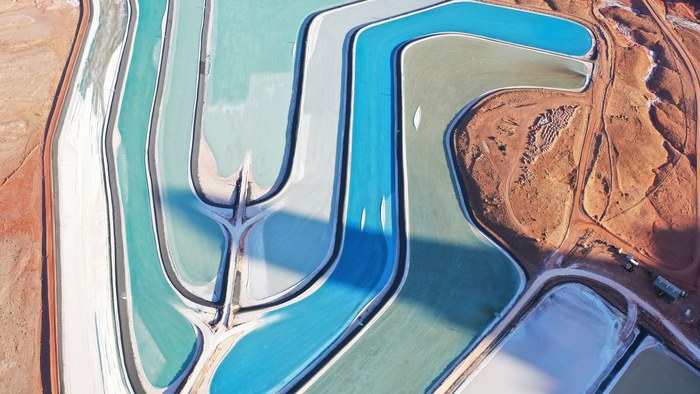
The project pairs Aramco's subsurface expertise with the Lithara technology platform developed by National Energy Services Reunited, which combines brine pretreatment, direct lithium extraction and carbonation. Direct lithium extraction pulls lithium from brine without the large evaporation ponds that conventional production depends on, which shortens the processing cycle and reduces the land and water footprint. The companies disclosed the agreement through a statement from National Energy Services Reunited and named no executives.
The commercial logic is narrower than the headline figure suggests, and executives should read the award as a technology validation step rather than as the start of a lithium industry. Two thousand metric tons a year is a pilot volume, equivalent to a rounding error against global lithium carbonate supply, and the five year term is long for a project of that size. What is being bought is proof that lithium can be recovered economically from Saudi subsurface brines at all. If that proof lands, the same geology that made the Kingdom an oil producer becomes a claim on the battery supply chain, and the produced water that oilfields currently treat as a disposal cost becomes a feedstock.
The award also fits a wider pattern in which Saudi Arabia is buying into the midstream of the energy transition rather than the end product. The Kingdom has already put capital behind domestic vehicle assembly and battery localisation, and a domestic lithium source would reduce the import dependency that those programmes otherwise carry. For Aramco the structure is characteristically cautious: it is contracting a specialist rather than building the capability in house, which caps the downside if direct lithium extraction does not perform at Saudi brine chemistries.
The two measures worth watching are whether the pilot converts into a commercial scale award at the end of its term, and whether Aramco moves from contracting to taking equity in the technology. A commercial follow on would signal that the economics cleared; a quiet non renewal would say the opposite more loudly than any statement.