

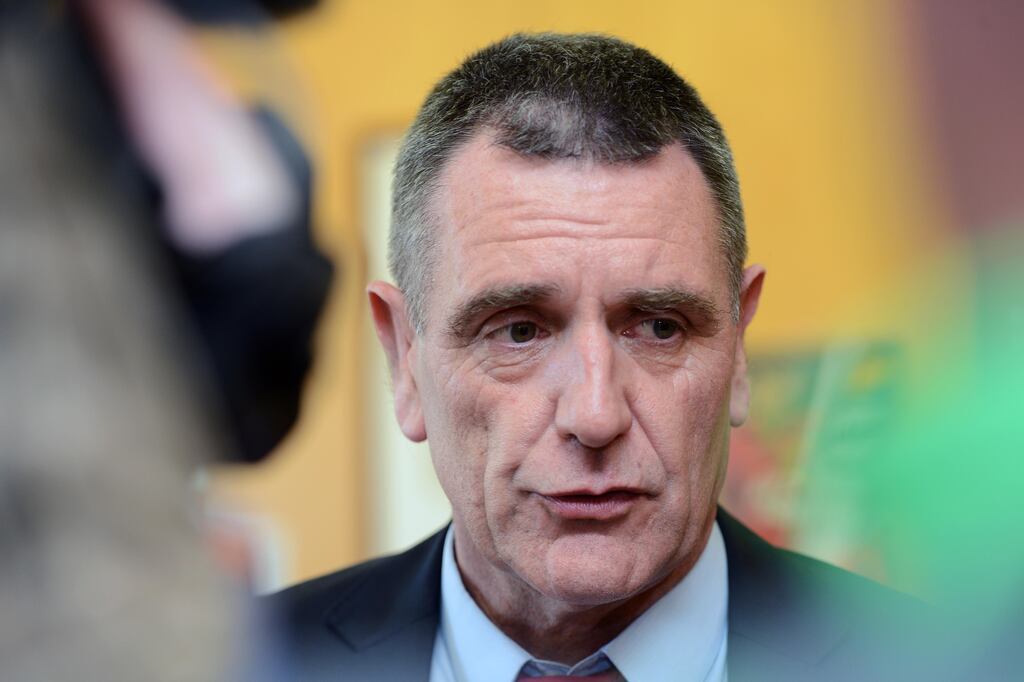
Kevin Foley has been appointed chairperson of the Workplace Relations Commission, the Irish State agency responsible for industrial relations, effective March 2, 2026, for a five-year term running until March 1, 2031. Foley, who stepped down as chair of the Labour Court in March 2025 after nine years in that role, becomes the third person to hold the position since the WRC's establishment in October 2015. The appointment, announced by Minister of State for Employment Alan Dillon, follows a competitive recruitment process conducted by the Public Appointments Service.
Dillon praised Foley's selection in a statement, saying he "brings a wealth of experience in industrial relations, dispute resolution and public service, built over many years at the highest levels of the State's employment relations institutions." The appointment represents a natural progression for a figure who spent more than four decades working in Ireland's industrial relations system. Foley replaces David Begg, former general secretary of the Irish Congress of Trade Unions, who held the WRC chair since 2021. In the months following his Labour Court retirement, Foley was appointed to chair the Government-backed Cost of Business Advisory Forum, which recently issued a comprehensive report with 63 recommendations to improve business competitiveness.
Foley's career spans over four decades and reflects deep expertise in workplace dispute resolution. He spent more than 20 years at the Labour Relations Commission, where he served as director of conciliation and mediation services before joining the Labour Court initially as deputy chair in March 2015. When he assumed the Labour Court chairmanship in July 2016, colleagues described him as instrumental to Ireland's industrial relations framework. The Labour Court characterized him as "pivotal" to dispute resolution, noting his pragmatic approach combined with direct communication that could "dampen down potential flash points." Most notably, Foley played a central role in resolving high-profile disputes during his Labour Court tenure, including mediating the lengthy 2024 Aer Lingus pilots pay dispute that resulted in strikes affecting tens of thousands of passengers before reaching a settlement. He has also worked on disputes involving the Health Service Executive, Irish Rail, AIB, and National Irish Bank, and was instrumental during Ireland's financial crisis in brokering agreements addressing major banking sector staff reductions.
The Workplace Relations Commission is an independent statutory body established in 2015 under the Workplace Relations Act that consolidated the functions of the National Employment Rights Authority, the Equality Tribunal, the Labour Relations Commission, and the Employment Appeals Tribunal. The agency operates approximately 246 employees as of 2021 with an annual budget of around 15.2 million euros, according to public records. The WRC provides conciliation, mediation, facilitation and advisory services on employment matters, conducts workplace compliance inspections, and increasingly oversees emerging regulatory areas including monitoring artificial intelligence systems deployed in employment and worker management functions. The commission board comprises a chairperson and eight ordinary members appointed by the Minister for Enterprise, Tourism and Employment.
Foley's appointment signals the Government's confidence in his dispute-resolution capabilities during a period when Irish industrial relations face evolving challenges, from emerging employment rights questions to novel regulatory frameworks around AI deployment in workplaces. His transition from the Labour Court, traditionally viewed as the final arbiter of industrial disputes, to the broader WRC role suggests an intent to strengthen conciliation and early-stage conflict resolution mechanisms. Given his track record managing complex multi-party negotiations involving major corporations and trade unions, it appears the Government is betting that his pragmatic mediation style and deep institutional knowledge can help the WRC navigate intensifying workplace relations pressures while promoting the more preventative dispute-resolution work the commission emphasizes.