


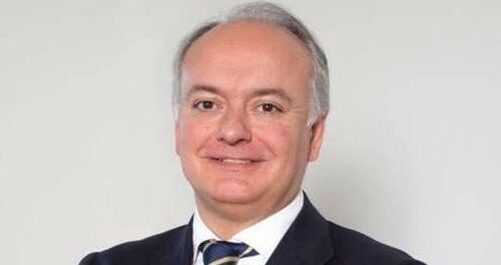
The board of El Corte Ingles has unanimously approved the appointment of Javier Catena as consejero delegado, the group chief executive, on the proposal of chairwoman Cristina Alvarez. The appointment, announced on 19 June 2026, hands Catena responsibility for implementing the Spanish retailer's strategic plan, which is in the process of being updated, and concentrates executive authority at the top of the group: its business units will report to the chief executive, who also takes charge of the management committee.
Announcing the decision, Alvarez said that Catena's arrival, with the support of the group's senior management team, would be decisive in a new stage of growth and investment, while reinforcing a corporate governance structure better adapted to new challenges, according to the company's Spanish-language statement. The appointment came days after the presentation of annual results and roughly five weeks before the group's shareholders' meeting on 24 July, giving the incoming chief executive a mandate anchored in a fresh set of numbers and an imminent governance calendar.
Catena is a returning insider. He previously served as El Corte Ingles' chief operating officer, with responsibility for supply chain, logistics and real estate, and led the group's large-scale property strategy, including the transformation of emblematic assets and complex urban regeneration initiatives. He left the family-owned retailer at the end of 2025 and joined Ginkgo, a pan-European urban regeneration investment platform associated with Edmond de Rothschild Private Equity, as director general for Spain and Portugal from March 2026. His career spans close to three decades in real estate investment, development and asset transformation across retail, residential, logistics, office and hospitality assets.
El Corte Ingles, headquartered in Madrid, is Spain's largest department store group. In its 2025-26 financial year, ended 28 February 2026, the group reported a net profit of 628 million euros, an increase of 22.8 percent, on a consolidated income volume of 17.25 billion euros. Turnover reached 14.99 billion euros, up 2 percent on a like-for-like surface basis, as the group continued to reduce debt and lean on fashion-led growth.
The design of the role is as telling as the name. Requiring every business unit to report to the chief executive, and placing the management committee under his direction, reads as a deliberate consolidation of executive power ahead of the strategic plan update; on that reading, the board has chosen clarity of command over the more distributed structure it has operated with in recent years. The choice of a real estate and operations specialist, rather than a merchant or digital executive, is an inference-rich signal in itself: it suggests the property portfolio, among the most valuable department store real estate in Europe, and the group's logistics backbone will be central levers of the next phase. Investors, suppliers and landlords should watch the updated strategic plan and the 24 July shareholders' meeting for the concrete capital allocation choices that follow.