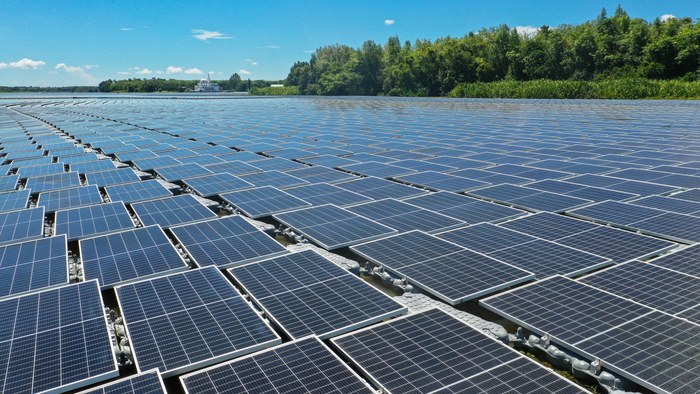
A consortium led by Abu Dhabi Future Energy Company PJSC, which trades as Masdar, has begun construction on a 200 megawatt floating solar plant at the Chereh Dam in Pahang State, Malaysia, alongside its local partners Citaglobal Bhd and TIZA Global Sdn Bhd. Masdar describes the plant as the largest of its kind in Southeast Asia once complete, covering roughly 950 acres of reservoir surface and powering the equivalent of more than 100,000 homes.
The project is held through a dedicated project company, Chereh Solar Sdn Bhd, and was secured under Malaysia's Large Scale Solar Cycle 5+ programme, a competitive tender in which the consortium's bid carried the lowest tariff in the floating solar category. Output is contracted to Tenaga Nasional Berhad, the national utility, under a power purchase agreement signed in December of last year and running for 21 years from the start of commercial operation.
Financial close was reached in late October, two days before the construction announcement, raising approximately RM580 million from three international lenders that the partners have not named. The plant is expected to begin operating in 2028, and the partners put employment during development and construction at around 1,500 jobs. Mohamed Jameel Al Ramahi, chief executive officer of Masdar, and Tan Sri Mohamad Norza Zakaria, executive chairman and president of both Citaglobal and TIZA Global, each commented on the start of works, though neither was quoted directly in the corroborating report.
The transaction matters to Masdar for reasons beyond its size. It is the company's first project in Malaysia, extending an Asian build out that already includes the 145 megawatt Cirata floating plant in Indonesia, and it lands in a market where land constraints have pushed developers toward reservoir surfaces that carry no competing agricultural or residential use. Floating arrays also run cooler than ground mounted equivalents, which lifts yield, and the economics have improved as mooring and cabling costs have fallen.
The financing structure is the more revealing detail. Reaching close on roughly RM580 million from three international lenders, on a tariff the consortium itself bid lowest in its category, indicates that floating solar in Malaysia is now being underwritten on terms close to conventional ground mounted solar rather than priced as an emerging technology. That is a meaningful signal for the rest of the Cycle 5+ pipeline and for sponsors weighing reservoir sites elsewhere in the region. For Citaglobal and TIZA Global it also converts a tender win into a funded, under construction asset with a long dated contracted revenue line, which is the step at which a domestic partner's balance sheet position in a consortium of this kind is normally settled.