

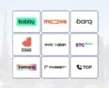
As of late-September 2026, the Middle East was home to nine fintech unicorns, encompassing buy now, pay later (BNPL) champions Tabby and Tamara, Egyptian super-app MNT-Halan, and digital bank STC Bank, according to Multiples, Dealroom, CB Insights, and company announcements as per Fintech news reporting.
These companies, which boast a combined valuation of US$17.75 billion, represent some of the region’s biggest and fast-growing fintech players. They’ve recorded remarkable growth and traction, and are now prioritizing geographic expansion, new product launches, and strategic partnerships to drive further innovation.
The 9 Fintech Unicorn from Middle East
Tabby – US$6.5 billion
Tabby is a BNPL platform operating in Saudi Arabia and the United Arab Emirates (UAE). It lets merchants grow their business by offering their shoppers flexible payments, including installments, and pay next month capabilities.
The platform processes more than US$18 billion in annualized transaction volume across 25 million registered users and 70,000 business partners including SHEIN, Amazon, Apple, IKEA, Jarir, Samsung and noon.
In September 2026, Tabby raised US$233 million in a Series F, reaching a US$6.5 billion valuation. The new capital will support the next stage of growth as Tabby expands beyond its BNPL offering into broader financial services in Saudi Arabia and the UAE. The round also includes a liquidity option for employees.
Over the past year, Tabby has secured licences to expand its financial services to customers and businesses. In Saudi Arabia, the Saudi Central Bank (SAMA) has granted Tabby consumer and SME finance licences, allowing it to offer larger and longer-term financing to consumers and working capital to businesses. Tabby also acquired Tweeq, a SAMA-licensed digital wallet, extending its capabilities into accounts, cards and transfers.
In the UAE, Tabby secured a Stored Value Facilities licence from the Central Bank of the UAE (CBUAE) to launch Tabby Cash, an alternative to a debit account with no account or card fees. Customers earn cashback on card spending and can send money locally and internationally.
Moove – US$2.1 billion
Headquartered in the UAE and founded in 2020, Moove is a global mobility company building the operating layer for autonomous mobility. The company finances, owns and operates productive mobility assets for leading mobility platforms across manned and autonomous transportation. It operates across 13 countries and 29 cities, with approximately 42,000 vehicles and more than 3,300 employees worldwide, and claims an annual recurring revenue (ARR) of US$420 million.
In August 2026, Moove raised US$250 million in a Series C, reaching a US$2.1 billion valuation. The funding will be used to support the expansion of Moove’s autonomous vehicle business, including autonomous fleet ownership and robotics-first depot infrastructure Nests, where autonomous fleets are charged, serviced, maintained and orchestrated for continuous operation. It will also be used to support new market launches, globally, and grow its autonomous vehicle workforce by more than 220% by the end of the year.
Barq – US$1.85 billion
Founded in 2023 and headquartered in Riyadh, Barq runs a mobile wallet and digital payments platform, handling international remittances and issues physical and virtual cards with perks including travel insurance, subscription management, and airport lounge access. The company serves more than 15 million users across over 210 nationalities, with funds processed through its platform having topped SAR 440 billion (US$118 billion).
Barq secured a US$329.5 million Series A at a US$1.85 billion valuation earlier this month. The startup said it will use the proceeds to strengthen operational efficiency, accelerate the development of products and services, invest in new financial and technology solutions, and enter additional regional and international markets.
Barq has been expanding its payments offering beyond domestic transactions. Earlier this year, it partnered with Alipay+ to enable cross-border QR payments, allowing its users to make payments at supported merchants across more than 220 markets globally.
D360 Bank – US$1.6 billion
D360 Bank is a fully digital, Sharia-compliant retail bank in Saudi Arabia backed by an investment consortium led by Derayah Financial Company, with the participation of the Public Investment Fund and several strategic investors. Customers can open accounts through the D360 app in approximately two minutes, with access to personalized services like bill payments, secure money transfers, and international remittances at competitive exchange rates with low fees.
Established in 2022, D360 Bank has attracted 3 million customers and secured SAR 3 billion (US$805 million) in deposits to date. In June 2026, the bank raised SAR 1.5 billion (US$402.5 million), elevating its valuation to SAR 6 billion (US$1.6 billion). The proceeds will be used to fuel its growth strategy, expand its footprint in Saudi Arabia, and enhance its suite of digital products and services.
MNT-Halan – US$1.4 billion
Founded in 2018 in Egypt, MNT-Halan is a fintech and lending super-app designed to provide digital banking and financial services to unbanked and underbanked populations. The company offers a diversified portfolio of services and innovative solutions, including digital payment solutions, mobile wallets, cards, BNPL capabilities, microfinance, SME lending, payroll lending, and more.
MNT-Halan claims more than 1.5 million quarterly active users and over 8 million customers globally. The company also reports over US$15.5 billion in loan disbursements completed to date.
In September 2026, MNT-Halan reached a valuation of US$1.4 billion following a strategic capital increase led by Al Ahly Capital Holding. The company is also preparing with a potential public exit, filing on September 08, 2026, a formal listing request to the Egyptian Exchange (EGX).
STC Bank – US$1.3 billion
STC Bank is a fully licensed digital bank in Saudi Arabia that evolved from the popular digital wallet service stc pay in 2025. Owned by stc Group, a leading telecommunications and digital services provider from Saudi Arabia, the company focuses on providing digital financial services through its mobile app, including payments, money transfers, cards, and other financial products.
Since it began operating as a bank, STC Bank has launched more than 15 products and services, and signed dozens of agreements and partnerships as part of a push into business banking. This year, the company introduced new account tiers designed to provide a more tailored banking experience.
STC Bank reached a valuation of SAR 5 billion (US$1.3 billion) in 2020 after raising US$200 million from Western Union.
Tamara – US$1 billion
Founded in 2020 and headquartered in Riyadh, Tamara is a leading fintech platform in Saudi Arabia and the Gulf Cooperation Council (GCC) region. The platform allows customers to split purchases into installments, both online and in stores, while merchants receive the purchase amount upfront. It also provides digital payment services and financing solutions, claiming more than 25 million customers and over 130,000 partner merchants across retail, travel, education, healthcare, and beyond.
In December 2023, Tamara raised a US$340 million Series C, reaching a US$1 billion valuation. The company is currently focusing on expanding beyond BNPL, increasingly positioning itself as a payments platform for businesses by offering capabilities including online and in-store payments, QR payments, promotions and payment processing. It’s also actively expanding overseas, securing in October 2025 a restricted finance license from the CBUAE to support its product diversification push, which includes new credit and payment offerings.
Fasset – US$1 billion
Founded in 2019 and based in Dubai, Fasset is an artificial intelligence (AI)-powered stablecoin neobanking platform. Its financial account enables individuals, businesses and institutions to receive, hold, move, spend and invest across currencies, markets and asset classes from one place.
Underpinning its products is Own Network, Fasset’s financial infrastructure connecting local banking systems, payment providers, financial institutions, telcos, liquidity providers, custody partners and settlement networks across more than 100 banking corridors.
Stablecoins are used within parts of the network as settlement infrastructure, allowing value to move between markets more efficiently where appropriate.
Fasset also utilizes AI to improve how transactions are routed across payment rails, currencies, liquidity providers, and settlement methods, based on factors including cost, speed, and availability.
Fasset claims to process more than US$40 billion in annualized transaction volume. It serves more than 3 million wallets across 125 countries and over 1,000 enterprises globally.
In May 2026, the company raised a US$68 million Series C at a US$1 billion valuation. The new capital will be used to support the expansion of Own Network, and increase investment in agentic AI-enabled systems supporting corridor banking, stablecoin settlement and tokenized asset infrastructure.
The Open Platform – US$1 billion
Headquartered in Dubai, the Open Platform is a tech company developing Web3 innovations in Telegram. The company provides a powerful toolkit of funding, expertise, and technology resources, streamlining access to critical tools like wallets, developer resources, SDKs, APIs, and marketplaces, to accelerate the mass adoption of cryptocurrencies.
The Open Platform also offers leading ecosystem products including the Wallet in Telegram, a crypto wallet built directly into the messaging app; Keeper, a self-custodial crypto wallet; Tribute, a creator monetization platform for Telegram; and Mira, a personal AI agent built natively on Telegram.
In July 2025, the Open Platform raised a US$28.5 million Series A, reaching a US$1 billion valuation. The company said it would use the proceeds to expand geographical, invest in go-to-market strategies, regulatory licensing, compliance infrastructure, and security enhancements.