


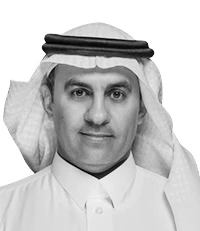
Saudi Cable Company appointed engineer Faris bin Mansour Al-Rajhi as managing director effective January 27, 2026, replacing Khalid bin Asaad Khashogji, who stepped down from the role but remains chief executive and board member. The appointment marks a strategic shift in management structure at the cable manufacturer as it navigates competitive dynamics in the Saudi industrial sector.
Khashogji, who held 22 years of corporate management experience, stepped aside from the managing director position to focus on strategic priorities at a higher level as chief executive. The company made no public disclosure of specific succession planning rationale beyond citing the appointment was in the best interest of the company. Al-Rajhi was appointed to Saudi Cable's board on November 26, 2025, positioning the transition as an internal promotion within the governance structure. No search firm involvement was disclosed in the announcement.
Al-Rajhi, who earned a bachelor's degree in electrical engineering from King Saud University in 1999, brings over two decades of experience across corporate management and business development. His professional portfolio extends across multiple commercial and industrial sectors. He has served as chairman of Methanol Chemicals Company (Chemanol) and held board memberships at Tourism Enterprise Co. (Shams). In his executive roles, Al-Rajhi served as chief executive of Dkhoun National Trading Co., Nafaes Dkhoun Perfume Co., and other real estate entities. He currently holds the chief executive position at Nafais Dukhoon Perfumes Company and chairs the board of World of Cans Factory Company and Qabas Technology Trading Company. His appointment also occurs while he holds a 1.92 percent equity stake in Saudi Cable.
Saudi Cable, headquartered in Jeddah and founded in 1975, operates as a listed company on the Saudi Exchange (Tadawul). The firm positions itself as a top-ten global cable manufacturer and the leading cable provider in the Middle East, with regional manufacturing facilities in Saudi Arabia, Bahrain, and Turkey. The company manufactures power cables ranging from extra-high voltage to low voltage, telecommunications cables, instrumentation cables, and electrical accessories, serving utilities, military, oil and gas, and industrial sectors globally. The company transitioned from a limited liability structure to a joint-stock company in 1988 and operates two business segments: sale of manufactured goods and turnkey power and telecommunications projects.
The appointment reflects an apparent strategy by Saudi Cable's board to decouple the chief executive and managing director roles, a common governance practice that separates strategic vision from operational execution. Al-Rajhi's extensive background in diversified industrial sectors and his prior board experience at the company position him to manage day-to-day operations while Khashogji focuses on enterprise strategy as chief executive. The appointment timing, coming as Saudi Arabia continues infrastructure development under its Vision 2030 initiative, suggests the company may be positioning itself for growth in energy and telecommunications networks, sectors where cable manufacturers play critical roles in national development projects.