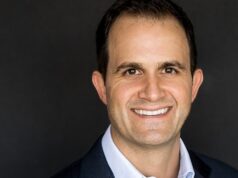



Bjørn Sibbern has assumed the role of Chief Executive Officer of SIX Group effective January 1, 2025, leading one of Europe's principal financial market infrastructure operators at a critical juncture for consolidation. The Danish executive, who joined SIX merely a year prior as Global Head of Exchanges, replaces Jos Dijsselhof, who departed after seven years to pursue opportunities in the Middle East. Sibbern's rapid ascension reflects the board's confidence in his ability to execute SIX's aggressive pan-European expansion strategy, particularly following the November 2024 agreement to acquire Aquis Exchange, a London-based multi-lateral trading facility.
The appointment was announced in November 2024 after an internal and external search process that had been underway for an extended period. Thomas Wellauer, Chairman of SIX's Board of Directors, stated that Sibbern had proven himself "a strong, highly motivated and proactive leader" during his first year and possessed the necessary international expertise to accelerate SIX's growth trajectory. Dijsselhof remained at SIX through February 2025 to ensure a smooth transition. No external search firm was publicly credited in the announcement, suggesting SIX sourced the appointment primarily from its own executive roster before conducting broader market consultation.
Sibbern brings more than two decades of experience spanning Nordic and Baltic markets at Nasdaq, where he served as Executive Vice President and President of European Markets, overseeing stock exchanges across the region and managing trading, listing, clearing, settlement, and data businesses. Earlier roles included leadership of Nasdaq's Global Information Services division from New York and the global commodities business, as well as the presidency of Nasdaq Copenhagen Exchange. Prior to his Nasdaq tenure, he served as Chief Executive of E*TRADE Bank Denmark and held positions at OMX Exchanges and Stocknet Norway. A Danish national, Sibbern holds an Executive MBA, a diploma in Business Administration, and an MSc in Economics and Business Law from Copenhagen Business School, providing both operational expertise and academic grounding in financial regulation.
SIX is Switzerland's principal financial infrastructure provider, operating a fully integrated exchange value chain across Swiss and Spanish markets. The company was formed in 2008 through a merger of the Swiss stock exchange SWX with Telekurs (financial information and payment transactions) and SIS (settlement and custody). It operates stock exchanges, securities settlement services, financial information distribution, and banking services. The company is owned by approximately 120 financial institutions, which are also its primary customers. Under Dijsselhof's tenure from 2018 to 2024, SIX underwent its largest reorganization in history, executing the 2.8 billion Swiss francs acquisition of Spanish bourse BME in 2020 and divesting its card business to Worldline, while championing the SIX Digital Exchange innovation initiative.
Sibbern assumes leadership as SIX pursues its most ambitious geographic expansion in years. The acquisition of London-based Aquis Exchange, announced in November 2024 and completed in July 2025, positions SIX as the only exchange group offering listing venues across Switzerland, the EU, and the UK simultaneously. The combination created a pan-European operator with 15% aggregated market share and access to 16 European capital markets, though it also indicates competitive pressures. Sibbern's prior quotes suggest measured optimism despite headwinds facing European exchanges generally. While acknowledging the rise of private markets has reduced listed companies globally, he has contended that public and private markets coexist in a "healthy relationship," positioning himself as pragmatic rather than defensive about traditional equity markets. His appointment underscores SIX's bet that technological integration, scale, and geographic diversification will sustain its position amid capital markets consolidation and regulatory evolution in Europe. However, execution risk remains substantial, as integrating acquisitions while competing with larger incumbents like Euronext and managing an increasingly complex regulatory landscape across three major jurisdictions will test his multi-market credentials.