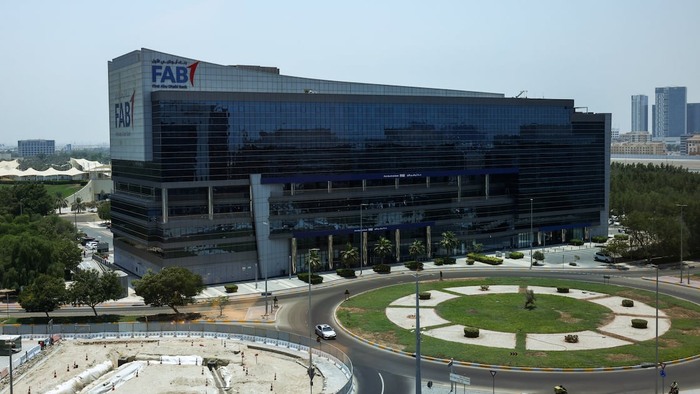
First Abu Dhabi Bank is raising 15 billion dirhams, about 4.08 billion dollars, through a rights issue, with its largest shareholder Mubadala Investment Company taking up its full pro rata entitlement. The bank approved the issue this week and has set the terms at 1,109,467,456 new shares priced at 13.52 dirhams each, roughly 3.68 dollars.
The subscription price represents a discount of about 30 per cent to the market close on the day before the announcement. A discount of that depth is standard mechanics rather than a statement about the bank: in a rights issue the discount sets the value of the right itself, and existing holders who take up their entitlement are left economically neutral whatever the headline gap. It is the shareholders who do not subscribe who are diluted.
The bank has said the proceeds will fund the next phase of its growth strategy in the United Arab Emirates and internationally. For a bank of this size the practical meaning of fresh equity is lending capacity. Core capital is the binding constraint on how much risk weighted asset growth a lender can carry, so an issue of this scale buys several years of balance sheet expansion without pressing against regulatory buffers.
Mubadala's decision to subscribe in full is the part the market will read hardest. A sovereign investor taking up its entitlement in cash signals both that it does not intend to be diluted and that it is willing to fund the strategy, and it removes the overhang that a partially underwritten issue would otherwise create. First Abu Dhabi Bank is the largest lender in the Emirates by assets and is led by group chief executive Hana Al Rostamani.
The issue also sits in a wider Gulf pattern. Banks across the region have been raising capital into a period of heavy project finance demand, with national development programmes, energy transition spending and large infrastructure pipelines all drawing on domestic balance sheets at once. The alternative to equity is slower asset growth or a greater reliance on wholesale funding, neither of which is attractive while credit demand is strong.
Reporting on the transaction has described it as among the largest Gulf rights issues in recent years. The bank has not published a timetable for the subscription period in the material announced this week.