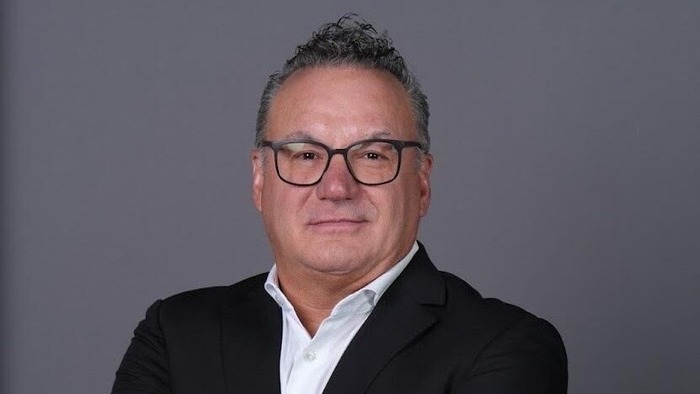
DHL Global Forwarding has appointed Sascha Geiken as Chief Executive Officer for Sub-Saharan Africa, a remit that covers the region excluding South Africa. He succeeds Egidio Monteiro and reports to Tobias Maier, who leads the freight forwarding division across the Middle East and Africa.
The appointment was made through the company's own announcement channel for the continent rather than a group level release, which is consistent with how the division handles regional leadership changes. Geiken is an internal appointment, and the division emphasised that he already knows both the business and the region, which is the usual rationale for promoting from within in a market where relationships with customs authorities, port operators and ground handlers take years to build.
The remit is harder than its headline suggests. Sub-Saharan Africa excluding South Africa strips out the region's single most developed logistics market and leaves a territory of roughly forty countries with very uneven infrastructure, thin air capacity on many lanes, long customs clearance times and border procedures that differ sharply from one jurisdiction to the next. Freight forwarding in that environment is less about moving boxes than about assembling routes, and the competitive advantage sits with whoever can give a customer a reliable transit time rather than the cheapest rate.
The division's framing of the appointment points in that direction. Trade volumes across the region continue to grow, but the constraint customers describe is predictability rather than raw capacity, and the stated priority is building services that customers can plan around. In practice that means investment in customs brokerage, bonded warehousing, cold chain for pharmaceutical and perishable flows, and the multimodal combinations that work around the gaps in direct air and sea connectivity.
There is a wider corporate context. DHL's parent group has publicly committed capital to expanding its African footprint, and freight forwarding is the division where that investment is most visible, because it requires facilities, licences and local staff rather than aircraft. Several of the region's larger economies have also been pushing trade facilitation reform and regional integration, which over time reduces the friction that has kept forwarding margins in the region both high and volatile.
For Geiken the task is to convert a growing market into reliable service, which is a different problem from the one his predecessor faced when the division was establishing its position. The measure of the appointment will be in transit time performance on the region's main trade lanes and in whether the division wins the kind of multi-country contracts that only a forwarder with genuine regional coverage can bid for.