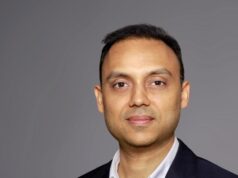


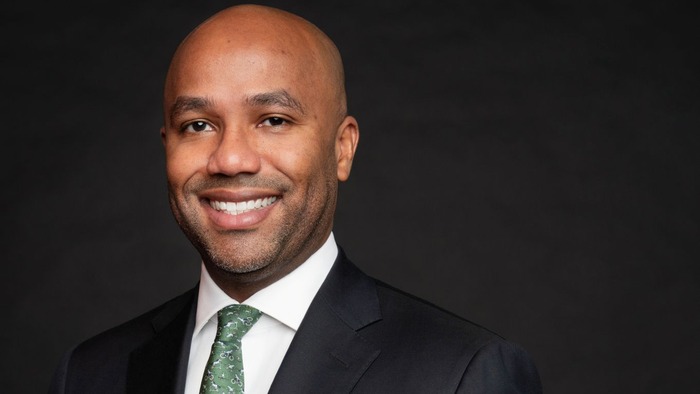
DHR Global has appointed Michael Patrick Okumu-Ringa as managing partner for the Middle East and Africa, a Dubai-based role that gives the Chicago-headquartered executive search and leadership advisory firm a named regional leader for the first time in its current expansion phase. The role took effect in late October.
The appointment is a statement of intent rather than a replacement. DHR Global has had a regional presence for some years, but the managing partner title formalises a build-out that the firm has been assembling in pieces, and it puts a single accountable executive over a territory that stretches from the Gulf to sub-Saharan Africa. Okumu-Ringa will lead the expansion of the regional business, build out the team, and strengthen the firm's executive search and leadership advisory capabilities across both halves of that territory.
His mandate is narrower than the geography suggests. The firm has pointed him at board and senior leadership hires for sovereign-backed entities, financial institutions, investment platforms and technology businesses, which is a deliberate concentration on the four client types that account for most of the region's senior hiring volume. He will also connect regional clients to the firm's global network, particularly through its London office, and he is understood to be splitting his time between Dubai and London rather than sitting exclusively in the Gulf.
Okumu-Ringa brings more than fourteen years of regional experience, including periods based in Dubai and Riyadh. He joins from Odgers Berndtson, where he was a partner leading the firm's financial services and technology practices across the Middle East and North Africa, and where he also ran a global digital assets practice. That last detail is the one most likely to matter commercially. Digital asset businesses have become significant employers of senior talent in the Gulf since Abu Dhabi and Dubai built out their respective regulatory regimes, and search firms have struggled to field consultants who understand both the technology and the governance expectations of a regulated financial institution.
Before that he ran senior leadership hiring at the Public Investment Fund, Saudi Arabia's sovereign wealth fund, which gives him direct experience of the single largest institutional hirer of executive talent in the region. A sovereign fund that is building operating companies at the pace the Public Investment Fund has sustained generates a continuous requirement for chief executives, chief financial officers and board members, and the relationships formed on the client side of that process are precisely what a search firm is buying when it hires from one.
The competitive context is crowded. Every major global search firm has expanded its Gulf presence over the past three years, and the regional market has moved from a handful of expatriate-staffed offices to a genuine contest for mandates. Differentiation now rests on whether a firm can place a candidate into a sovereign-backed entity with the governance credentials that such a board requires, which is a different proposition from filling a commercial role at a multinational subsidiary.
Okumu-Ringa holds a degree from Makerere University and has co-authored two papers on leadership in the region. DHR Global has not named a predecessor in the role, consistent with the position being newly created rather than vacated.
For DHR Global, the measure of the appointment will be whether the regional business converts its existing relationships into repeat board-level mandates. Regional expansion announcements are common in executive search and the difference between the ones that work and the ones that quietly lapse is usually whether the firm gave the regional leader the authority to hire ahead of revenue. On the evidence of the mandate as described, it has.