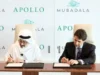



ADES Holding Company has signed a contract to put one of its jack-up rigs to work for PT Pertamina Hulu Mahakam, the Indonesian upstream operator, in an award the Saudi drilling contractor values at about SAR 173.14 million, or roughly USD 46.17 million, including mobilisation and demobilisation fees. The company recorded both the award and the signature on 26 October 2026, and the disclosure reached the Saudi market the following morning.
The firm period runs for 406 days, with a further optional period of 30 days on top of it. Operations are expected to begin around the end of December, once the rig finishes a short term campaign it is already running in the region. ADES Holding Company described PT Pertamina Hulu Mahakam as a new counterparty and said the award begins a relationship that broadens its client base in Southeast Asia and creates a platform for further collaboration in Indonesia. The filing reported no related party interest in the contract.
For a contractor whose fleet and revenue are concentrated in one home market, the significance of this award is not its size. About SAR 173 million is a modest sum for a contractor of this size. What it buys is counterparty diversification, and that is the scarcer commodity. Concentration on a single dominant domestic buyer is a risk no backlog figure captures, because it shows up only when that buyer changes its own drilling plan, at which point a rig owner either finds work in another jurisdiction or accepts idle time it still has to pay for. An award from a new client in a different country, with a firm period long enough to carry a rig through more than a full year of operations, is a direct answer to that exposure. On this reading the commercial logic sits in the duration rather than in the headline value.
Boards and investors should watch three things here rather than the number. The first is whether the optional 30 day extension is taken up, because an option exercised is usually the cheapest available signal that a first contract has gone well and that follow on work is realistic. The second is the start date. A commencement late in December leaves very little slack between the end of the current regional campaign and the beginning of this one, and any slippage pushes revenue into the following reporting period rather than losing it, which is a timing question an analyst will ask before a results call. The third is the shape of the pipeline behind it: one award in a new country can be an opportunistic fixture or the first of a series, and the difference will show in whether further Southeast Asian work appears over the next two quarters. For competitors in offshore drilling, the wider read across is that jack-up demand east of Suez is firm enough to absorb capacity that is not required at home, which matters more to day rate expectations than any single contract value does.